Best Duck Calls for Timber, Open Water and Wood Ducks

A working shortlist of six duck calls, ranked by reed design, habitat fit and what the manufacturer actually promises on the barrel.

By Mckinley BirdUpdated 15 min read
On this page
- How I narrowed the field to six duck calls
- Best duck calls at a glance
- Single reed or double reed: which should you buy first?
- Timber, open water or flooded green trees?
- 1. Duck Commander Jase Robertson Pro Series Duck Call — Best overall
- 2. Duck Commander Specialty Duck Calls — Best upgrade
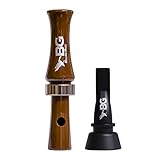
- 3. Buck Gardner BGC The Finisher Duck Call Combo Pack — Best minimal setup
- 4. Buck Gardner BGC Double Nasty Duck Call & Wood Duck Call — Best for pros
- 5. Echo Calls Echo Diamondwood Timber Double Reed Duck Call — Best premium
- 6. minzico Wood Duck Call — Best budget pick
- Wood duck calls and whistles: the specialty layer
- What the listings do not tell you about tuning
- The verdict
- FAQ
The best duck calls for most hunters are the Duck Commander Jase Robertson Pro Series, a 2.56 oz double-reed hen mallard in a burnt hedge barrel that Duck Commander describes as their easiest-blowing call for both open water and finishing. If you already run a mallard on your lanyard and need a specialty voice for timber holes, the Duck Commander Specialty single-reed Wood Duck call is the better buy.
How I narrowed the field to six duck calls
I started with what the listings actually publish, then cut anything I could not describe honestly. Three reasons pulled calls off the shortlist.
- No stated reed count. A duck call without a clear single-reed or double-reed label is a call you cannot match to a hunter's skill level. Anything ambiguous went.
- No stated target species. A "duck call" that does not say whether it voices a hen mallard, a wood duck, a pintail or a wigeon is a call you cannot place in a spread. Anything vague went.
- Overlap with a stronger listing in the same set. Where two calls did essentially the same job and one published more specifications, the sparser one was cut.
What survived is a working six: two hen mallard calls, one wood duck specialty, two combo packs that pair a mallard with a specialty, and a premium double-reed built for close work. Three of the six are wood-barreled and three are polymer. Two of the six carry a published weight. Only one carries a full three-axis dimension figure. That last point matters more than it sounds, and I come back to it below.
Best duck calls at a glance
| Pick | Reed | Barrel material | Price |
|---|---|---|---|
Best overall Duck Commander Jase Robertson Pro Series |
Double, riveted | Burnt hedge wood | Check Price |
Best upgrade Duck Commander Specialty Wood Duck |
Single | High-impact plastic (claim) | Check Price |
Best minimal setup Buck Gardner Finisher Combo |
Double (Mallard Magic) plus 6-in-1 whistle | Not listed | Check Price |
Best for pros Buck Gardner Double Nasty and Wood Duck |
Two-call kit, mallard plus wood duck | Polycarbonate (claim) | Check Price |
Best premium Echo Diamondwood Timber |
Double | Bocote wood with clear poly | Check Price |
Best budget pick minzico Wood Duck Call |
Not listed | Natural wood (claim) | Check Price |




Single reed or double reed: which should you buy first?
Most guides compare duck calls on price and brand. That is not what decides it. Reed count decides it, because reed count decides how the call behaves under a beginner's air and how it sits in a spread.
- Double reed calls forgive uneven back-pressure. They break into sound more easily, they are harder to blow flat, and they carry a natural rasp. Four of these six picks are double-reed: the Jase Robertson Pro Series, the Mallard Magic inside the Buck Gardner Finisher combo, the Double Nasty inside the Buck Gardner timber kit and the Echo Diamondwood Timber.
- Single reed calls give you more range and volume, and more ways to sound bad while you learn. The Duck Commander Specialty Wood Duck is the single reed here, and it is a specialty voice rather than a hen mallard, which is a fair place to run a single reed even if you are new.
- Unstated is a real category and you should treat it as one. The minzico listing does not name a reed count. You can still buy it, you just cannot plan around it the way you can plan around the four calls above.
If you have never called a duck, start on a double reed hen mallard. Everything else stacks on top.
Timber, open water or flooded green trees?
Habitat is the other axis. The manufacturer descriptions on these six calls line up neatly with three distinct scenarios, and the pick changes with each.
Open water. You need a hen mallard with a piercing high end for hail calls at distance. Duck Commander describes the Jase Robertson Pro Series as pairing a piercing high end for open water with a soft, raspy low end for finishing, which is why it wins the overall slot.
Close timber. You need mellow rasp at low volume, not reach. Echo Calls describe the Diamondwood Timber as designed especially for close-in calling with a mellow yet raspy tone. The name is not accidental.
Green timber with wood ducks. You need a specialty voice on top of a mallard call. Two picks solve that pairing in one purchase: the Buck Gardner Double Nasty and Wood Duck combo puts both on your lanyard out of the box, and the Buck Gardner Finisher combo replaces the wood duck with a 6-in-1 whistle that also covers pintail, wigeon and drake mallard.
1. Duck Commander Jase Robertson Pro Series Duck Call — Best overall
A wooden double-reed hen mallard the maker positions as their easiest-blowing pattern, which is exactly what most hunters need first.
Best for: hunters who want one hen mallard call that works from open water to the finish Skip it if: you only chase wood ducks or hunt tight timber
The Jase Robertson Pro Series is the second-most expensive pick in this set, and it earns the top spot on what it publishes rather than what it costs. The barrel is burnt hedge wood, model DCPROBH, listed at 2.56 oz, which is a real weight figure and one of only two in the six. Duck Commander describes the reed as a patented riveted double reed and the voicing as a piercing high end for open water paired with a soft, raspy low end for finishing. They also call it the easiest-blowing call they have produced, which is a marketing claim, not a measured one, but it lines up with the double-reed design.
Against the rest of the set it is the only wooden, single-piece hen mallard call from a major brand here. The Echo Diamondwood is wooden too, but it is aimed at close timber rather than mixed water. The trade-off: it is not a specialty call, so wood-duck-only hunters should look elsewhere.
Pros:
- Riveted double reed forgives beginner air
- Wooden burnt hedge barrel with a stated 2.56 oz weight
- Voicing covers open water and the finish
- Endorsed hen mallard pattern from a named designer
- Friction-fit assembly for field disassembly
Cons:
- Second-most expensive pick in this set
- Wooden barrel needs more care than polymer in wet weather
- Not a specialty call for wood ducks or whistling ducks
2. Duck Commander Specialty Duck Calls — Best upgrade
A dedicated single-reed wood duck call to bolt onto a lanyard that already carries a hen mallard.
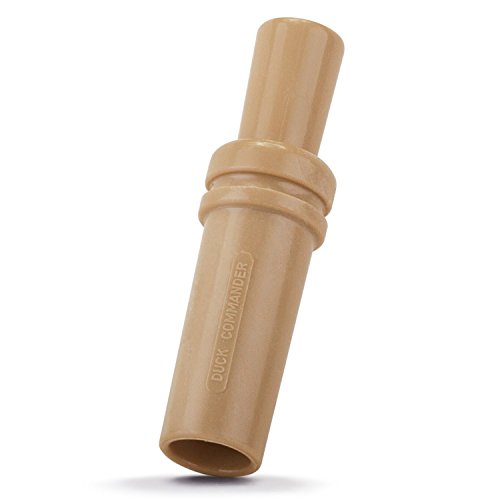
Best for: hunters adding a dedicated wood duck voice to a mallard lanyard Skip it if: you need a hen mallard call rather than a specialty piece
This is the specialty layer on top of a mallard call, and in a set of six it is the one buyers choose most often. It is the second-cheapest pick here, model DCCALLWD, first released in 2017 and built from what Duck Commander describes as high-impact plastic. The reed is single, and Duck Commander says the voicing is designed to mimic both flying and sitting wood duck sounds. The published weight of 0.28 g looks like a listing rounding artefact, so I would not lean on it as a real spec, but the reed count and target species are unambiguous, which is what matters for a specialty.
Against the field, this is the only standalone wood duck call in the set that names a single-reed design. The Buck Gardner timber combo also includes a wood duck call, but bundles it with a mallard. If you already own a hen mallard, buying just the specialty is the cleaner spend. The trade-off is narrow use: on a bluebird day over open water it stays quiet on your lanyard.
Pros:
- Only standalone single-reed wood duck call in this set
- Explicit flying and sitting voicings from the maker
- The lowest-numbered sales rank of the six
- Second-cheapest pick here
- Polymer body claim for wet-weather durability
Cons:
- Weight figure on the listing reads implausibly low
- Single-reed design is less forgiving for total beginners
- Specialty voicing only, not a mallard replacement
3. Buck Gardner BGC The Finisher Duck Call Combo Pack — Best minimal setup
A hen mallard double reed and a 6-in-1 whistle in one box, aimed at the hunter starting a lanyard from scratch.
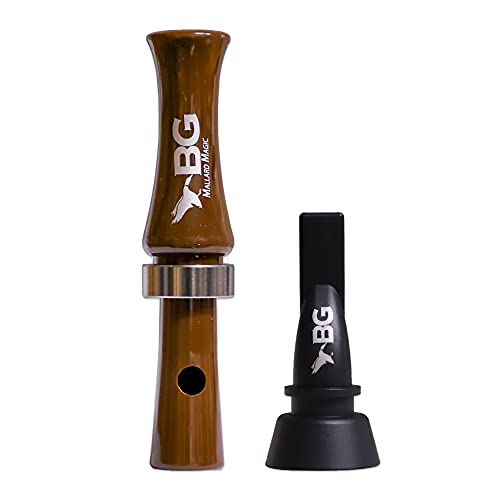
Best for: new hunters who want a hen mallard and a whistle in one box Skip it if: you already own a mallard call and just need a specialty
The Finisher pack is the middle price position of the six and pairs the Mallard Magic double-reed hen mallard with a whistle Buck Gardner describes as covering mallard drakes, pintail, wood duck, wigeon and other whistling ducks. That is a lot of coverage for one purchase. Buck Gardner also calls out Quick-Tune double reed guts on the Mallard Magic, which is their way of saying the reeds are user-serviceable in the field. Model on the listing is MM-PT.
In a set with two other combo packs, this one earns its slot for a specific buyer: someone who does not yet own any call. You leave with a mallard voice and a whistle that stands in for four species. The trade-off against the Buck Gardner timber combo is real. If you already run a mallard, the Finisher gives you a second one you do not need. Its counterpart pairs a mallard with a dedicated wood duck call instead. So the Finisher is a first-lanyard buy, not a second-lanyard buy.
Pros:
- Two calls in one box, no accessories to buy separately
- 6-in-1 whistle covers four whistling ducks
- Mallard Magic uses field-serviceable Quick-Tune reeds
- Double-reed design forgives new callers
- Mid price position rather than premium
Cons:
- Duplicates a mallard call you may already own
- Barrel material is not stated in the listing
- Slower seller than the standalone specialty calls here
4. Buck Gardner BGC Double Nasty Duck Call & Wood Duck Call — Best for pros
Two calls sized for one lanyard: a mallard double-reed and a wood duck specialty, both polycarbonate.

Best for: flooded timber hunters running a mallard and a wood duck on one lanyard Skip it if: you want a wooden barrel or a single-reed mallard
The Double Nasty pairing is the timber hunter's combo. Model DN-WD, listed dimensions 1.5 by 6.9 by 4.7 in, colour green and smoke. Buck Gardner describes the Double Nasty as featuring a Spit-Tech toneboard, which they say helps prevent sticking when wet, and the barrels as polycarbonate. The pack ships with a Wood Duck call Buck Gardner describes as simple to use and effective all season.
Against the Finisher combo, this is the deeper hunter's kit. You lose the pintail and wigeon whistle voicings, and you gain a dedicated wood duck barrel. Against the standalone Duck Commander wood duck, you gain a mallard in the same box for a mid-tier price position rather than an entry-tier one. The trade-off is materials. Polycarbonate is durable but does not have the acoustic character of hedge or bocote. If you want a wooden hen mallard, buy the Jase Robertson and add the standalone wood duck instead.
Pros:
- Only combo here pairing mallard with a dedicated wood duck call
- Spit-Tech toneboard claim for wet-condition performance
- Full three-axis dimensions published
- Named colour and model
- Mid price position for two calls
Cons:
- No wooden barrel option
- Whistle-species coverage is absent versus the Finisher combo
- Feature bullets are short on reed count detail
5. Echo Calls Echo Diamondwood Timber Double Reed Duck Call — Best premium
A bocote and clear-poly double-reed hen mallard voiced for close, mellow, timber-hole calling.

Best for: guides who finish birds close in timber and want a wooden barrel Skip it if: you want a loud open-water hail call above anything else
The Diamondwood Timber is the most expensive pick here, and Echo Calls positions it narrowly. The listing describes it as designed especially for close-in calling, producing a mellow yet raspy tone, and aimed at guides and serious duck hunters. The barrel is bocote with a clear poly insert. It is a double reed.
That narrow positioning is the whole reason to buy it. Against the Jase Robertson Pro Series, which Duck Commander pitches as covering both open water and finishing, the Diamondwood is a specialist. It gives up the piercing high end so the low end can do more work at conversational volume. In a timber hole where you are calling ducks eight yards over the tree line, that is the right trade. In an open pit blind on a big rice field, it is the wrong one. The trade-off is scope: you are buying a call for one habitat and paying the highest price in this set to do it.
Pros:
- Bocote wooden barrel with clear poly insert
- Voicing tuned specifically for close-in timber work
- Double-reed design that stays forgiving under low air
- Positioned by the maker for guides
- Premium build materials
Cons:
- Highest price position in this set
- Not built for loud open-water hail calling
- Listing publishes no useful weight or dimension figures
6. minzico Wood Duck Call — Best budget pick
A wooden call at the lowest price position of the six, with almost nothing published beyond the material.

Best for: first-time callers testing the water before spending on a name brand Skip it if: you want published specifications and a stated reed count
The minzico is the cheapest of the six, and the listing is thin. minzico describes the call as made of natural wood, easy to blow, and suited to hunting wild duck. There is no reed count, no weight, no dimensions, no model number and no target species beyond "duck". You are buying on price and on a photograph.
That does not mean it has no place. If you are unsure whether duck calling is for you, and you want to try a wooden call before spending on a Duck Commander or an Echo, the entry price makes the risk small. Against the rest of the set the trade-off is severe: every other pick tells you what it is trying to be, and this one does not. That is a real weakness, not a quibble. Move up to the Duck Commander Specialty wood duck the moment you are sure you like the sport.
Pros:
- Lowest price position in this set
- Wooden barrel at an entry price
- Small enough to slip into a jacket pocket
- Low commitment for a first attempt
- Single-piece design with no assembly
Cons:
- Reed count not stated on the listing
- No published weight, dimensions or model
- Target species is generic "duck"
- Sparse feature description compared with every other pick
Wood duck calls and whistles: the specialty layer
A hen mallard call gets you most of the birds. A specialty call gets you the rest. Three picks in this set live in the specialty layer, and each solves a different problem.
- The Duck Commander Specialty Wood Duck is the pure specialist. Single reed, wood-duck-only voicing, entry price position. Buy this if you already own a mallard call.
- The Buck Gardner Finisher combo replaces the standalone wood duck with a 6-in-1 whistle Buck Gardner describes as covering drake mallard, pintail, wood duck and wigeon. Buy this if you want breadth rather than a dedicated wood duck.
- The Buck Gardner Double Nasty and Wood Duck combo is the both-in-one-box answer. Buy this if you do not yet own a mallard and you know you will hunt timber.
None of these three replaces the others. If you hunt seriously across seasons, you will end up with a hen mallard, a wood duck and a whistle on the lanyard. The question is which order to buy them in.
What the listings do not tell you about tuning
Duck calls need attention across a season, and the listings here are quiet on most of that. Three points worth knowing before you buy:
- Reed sticking is real and the makers know it. Buck Gardner name a "Spit-Tech toneboard" on the Double Nasty and "Quick-Tune double reed guts" on the Mallard Magic. Those are claims about wet-weather behaviour and about field servicing, respectively. Neither is a measurement, but both are the makers telling you the reeds will need occasional attention.
- Wooden barrels and polymer barrels behave differently in the cold. The listings do not quantify this, they just tell you the material. Three of these six calls are wood (Jase Robertson, Diamondwood Timber, minzico) and three are polymer or polycarbonate (Specialty Wood Duck, Finisher combo, Double Nasty combo).
- Reed replacement and re-tuning is not covered on any of these listings. You cannot judge how easily a call re-tunes from the product description. Buy from a maker whose reeds you can find, and treat that as a hidden cost of ownership rather than a spec.
The verdict
The Duck Commander Jase Robertson Pro Series is the right default. It is a wooden double-reed hen mallard weighing 2.56 oz, and Duck Commander pitches it as their easiest-blowing pattern with voicings that cover both open water and the finish. That is what most hunters buy a duck call to do.
Two conditions flip the recommendation. If you already own a hen mallard and you want to add a wood duck specialty to your lanyard, the Duck Commander Specialty Wood Duck is the better spend: it is the second-cheapest pick here and the one buyers choose most often across this set. If you hunt close-in timber and you want a call built for a mellow low end rather than a piercing high end, the Echo Diamondwood Timber earns its premium price position. Echo Calls positions it explicitly for guides and close-in work.
The runner-up spot on a first purchase goes to the Buck Gardner Finisher combo, on one specific advantage: it puts a hen mallard and a 6-in-1 whistle into a new hunter's hand for one mid-tier price, which no other pick here matches.
FAQ
Are the best duck calls always double-reed?
The best duck calls for beginners are almost always double-reed, because double reeds break into sound more easily and stay forgiving under uneven air. Four of the six picks here are double-reed, including the winning Jase Robertson Pro Series. Single-reed calls give you more range and volume, and they suit specialty voices like the Duck Commander wood duck, where the sound you are chasing is narrow.
Is a wooden duck call worth it over polymer?
Whether a wooden duck call is worth it depends on how you hunt and how you store it. Three picks here are wood: the Jase Robertson burnt hedge, the Echo Diamondwood bocote and the minzico. Three are polymer or polycarbonate. Wood is traditional and carries an acoustic character makers describe as warmer. Polymer is durable, wet-tolerant and cheaper to produce. Both work.
What is the difference between the Jase Robertson and the Echo Diamondwood?
The difference between the Jase Robertson and the Echo Diamondwood is habitat. Duck Commander describes the Jase Robertson as pairing a piercing high end for open water with a soft raspy low end for finishing. Echo Calls describe the Diamondwood Timber as designed especially for close-in calling with a mellow yet raspy tone. One call reaches, the other finishes.
Which duck call should I buy first as a beginner?
The duck call you should buy first as a beginner is a double-reed hen mallard. Every other purchase stacks on top of it. The Jase Robertson Pro Series is the strongest option in this set for that role, at 2.56 oz in a burnt hedge wooden barrel with a riveted double reed. If your budget is tighter, the Buck Gardner Finisher combo bundles a double-reed mallard with a whistle.
Do I need a separate wood duck call?
You do need a separate wood duck call if you hunt flooded timber or beaver ponds where wood ducks are the main quarry. A hen mallard call does not voice a wood duck correctly. Two picks here solve that: the Duck Commander Specialty Wood Duck as a standalone single-reed, and the Buck Gardner Double Nasty and Wood Duck combo that pairs a mallard with a dedicated wood duck barrel.
Start with the Jase Robertson Pro Series on a plain lanyard and hunt with it for a season. That single decision teaches you more about what you actually need than any spec sheet, because it puts a competent double-reed hen mallard in your hand for both open water and the finish. When you know whether you are gravitating to big-water hunts or tight timber holes, add either the Echo Diamondwood for close work or a wood duck specialty on top. The winner is the right default because it does not force that choice on the first day. It buys you a season to make it well.