Best Duck Calls for Beginners: Duck Commander Wins
A ranked shortlist of five duck calls a first-year hunter can actually blow, with the deciding trait named and every trade-off spelled out.

By Mckinley BirdUpdated 14 min read
On this page
- Best duck calls for beginners at a glance
- How I cut the field to five
- 1. Duck Commander Specialty Teal Hen — Best overall
- 2. Duck Commander Classic Shadow — Best upgrade
- 3. Haydel's DR-85 Mallard — Best warranty
- 4. Slayer Mallard Reaper — Best premium
- 5. Power Calls Wood Duck — Best minimal setup
- Single reed or double reed: which forgives a new caller?
- What actually decides a beginner call?
- What the listings will not tell you
- How to practice in the two weeks before opening day
- The verdict
- FAQ
The best duck calls for beginners are led by the Duck Commander Specialty Teal Hen, a 2.2 oz double-reed on a friction-fit system that forgives shaky air pressure on your first weekend. If you are already comfortable holding steady back-pressure and want a mallard finisher, the Duck Commander Classic Shadow single-reed is the better buy. Most new hunters compare barrels and brands. The reed count is what actually decides it.
Best duck calls for beginners at a glance
| Pick | Reeds | Body material | Price |
|---|---|---|---|
Best overall Duck Commander Specialty Teal Hen |
Double | High-impact plastic | Check Price |
Best upgrade Duck Commander Classic Shadow |
Single | Polycarbonate | Check Price |
Best warranty Haydel's DR-85 Mallard |
Double, adjustable | Clear (not specified) | Check Price |
Best premium Slayer Mallard Reaper |
Double | DELRIN claim | Check Price |
Best minimal setup Power Calls Wood Duck |
Single, pan toneboard | Poly/acrylic blend | Check Price |


How I cut the field to five
I started from the Game Calls > Duck category and cut on three lines. First, anything a first-year caller cannot get sound out of in a driveway session. Second, anything whose listing describes the sound but never names the reed style, the toneboard, or the body material. Third, anything with a barrel wide enough that a new hunter would fight the grip more than the reed.
Three cuts drove the shortlist:
- No reed style stated. If the listing does not say single or double reed, a beginner cannot judge whether the call will forgive them. Cut.
- Match-tuned competition calls with no beginner note. Great calls, wrong reader. Cut.
- Novelty finishes with no material named. A duck call lives on a lanyard in the rain. If the listing will not commit to a plastic or a polymer, the call is not for a first season. Cut.
Five picks survived. Three are double-reed calls, which is the reed style a new caller should start on. Two are single-reed, kept because one is the natural upgrade after a season and the other targets a species where single-reed is the norm. Four of the five have a stated body material, and one of the five publishes a warranty term at all. That last number is worth remembering when you read the verdict.
1. Duck Commander Specialty Teal Hen — Best overall
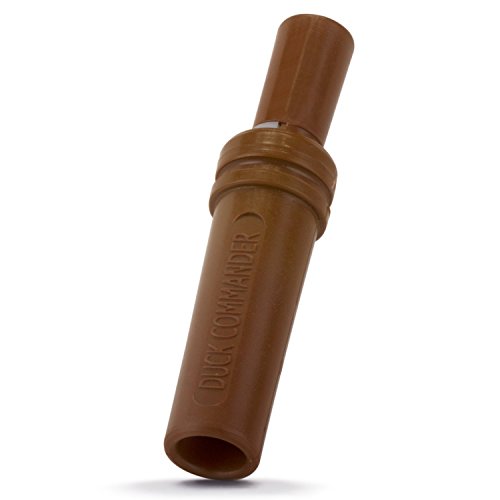
A 2.2 oz double-reed with a patented friction-fit system, priced as the cheapest of the five, and the one buyers choose most often here.
Best for: a first-year hunter working small-water teal and wanting a forgiving double-reed Skip it if: you hunt big-water mallards and need low, raspy hen tones
This is the call I would put in a beginner's hand before any other in this set, and the reason is the reed. Duck Commander says the double-reed is friction-fit on Phil Robertson's patented system, which means back-pressure builds without the fine air control a single-reed demands. The body is high-impact plastic, and the whole call weighs 2.2 oz, so it sits light on a lanyard next to a whistle and a hail call. Model number DC-CALL-T1, in teal.
The specialisation is worth naming honestly. Duck Commander pitches this as a teal hen call with a faster cadence and higher pitch than a mallard hen. That is a real limitation if mallards are your only quarry, and a real advantage if teal drop into your marsh in September. The manufacturer also calls it a confidence call for late-season birds. Treat that as a claim, not a promise. Against the rest of this set it gives up mallard versatility and it lists a limited warranty rather than a stated term, but it is by far the easiest way to get a duck-like sound out on your first afternoon.
Pros:
- Double-reed forgives shaky air pressure
- Lightest call in the set at 2.2 oz
- Cheapest of the five
- Sells faster than the rest of this set
- High-impact plastic body stated
Cons:
- Teal hen voicing, not a mallard hen
- Warranty listed only as "limited"
- Higher-pitched than typical finisher calls
2. Duck Commander Classic Shadow — Best upgrade
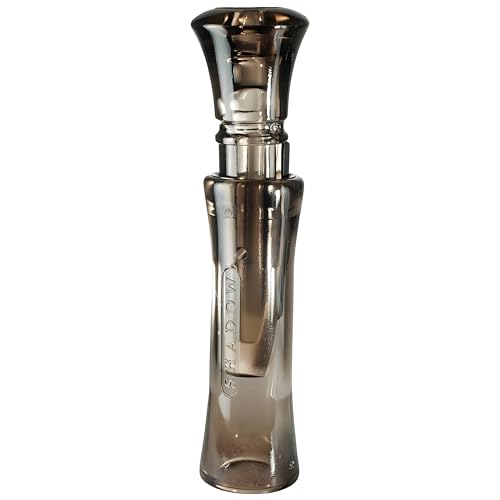
A single-reed polycarbonate mallard hen call in a 7.87 x 1.7 x 5.05 in package, aimed at the caller who has one season under their belt.
Best for: a beginner ready to graduate to a single-reed mallard hen finisher Skip it if: you have not yet mastered steady air pressure on a double-reed
The Shadow is the second-cheapest of the five and the only single-reed mallard hen in this shortlist. Duck Commander describes it as a raspy, finishing-style hen call built on a friction-fit single-reed inside a smoke grey polycarbonate barrel, model DCCALL2012. The listing goes out of its way to say it is designed for beginners while ringing loud enough for seasoned hunters, which is honest marketing for a single-reed: the range is bigger, but so is the skill floor.
Why put a single-reed on a beginner list at all? Because most new hunters outgrow a double-reed inside a season, and a finisher is what closes birds over the decoys. Owning both means you can hail with the Teal Hen or a mallard hail call, then switch to the Shadow when a group works close. Against the Teal Hen this call demands more air control and gives less forgiveness on the top end, and against the Slayer it does not name a premium material. What it does offer is the natural step up from pick one at an entry price, which is exactly what a second-season caller needs.
Pros:
- Single-reed for the classic mallard hen rasp
- Polycarbonate barrel stated
- Second-cheapest here
- Friction-fit reed simplifies tuning
- Pitched as a finishing call
Cons:
- Steeper learning curve than a double-reed
- Weight listed as 4.54 g on the source, likely a listing error
- No warranty term published
3. Haydel's DR-85 Mallard — Best warranty
The only call in the set with a stated warranty term, a 30-day window, and the only one with an adjustable floating wedge for personal tuning.

Best for: a new caller who wants a tunable call and a stated return window Skip it if: you want the lightest call on your lanyard
Haydel's nicknames the DR-85 The Deceiver, and the pitch is a double-reed mallard call with a fully adjustable floating wedge, made in the USA. Model DR-85, in clear. Two things make it useful for a beginner. First, adjustability: if the reed sits wrong for your air, you can move the wedge instead of buying a new call. Second, the published 30-day warranty, which is the only stated term in this five-pick set. That matters because a beginner is far more likely to drop a call in mud, chip a reed, or discover in week two that the call is not tuned to their voice.
Haydel's also says the call is hand-tuned by professional callers and that it blows wet, both of which read as manufacturer claims rather than measured facts. Against the Duck Commander picks, the DR-85 sits at a mid price position and is heavier at 1 lb on the listing, which is unusually high for a single call and suggests packaging is included in that figure. Take the weight with a pinch of salt. Take the warranty at face value.
Pros:
- Adjustable floating wedge for tuning
- Only pick with a stated 30-day warranty
- Made in USA per listing
- Double-reed for beginner-friendly back-pressure
- Mallard-hen voiced
Cons:
- Listed weight of 1 lb appears to include packaging
- Body material not named on the listing
- Mid-price for entry-tier competition
4. Slayer Mallard Reaper — Best premium
A double-reed mallard call Slayer says is machined from DELRIN, positioned as the most expensive pick here.

Best for: a beginner willing to pay more for a DELRIN body and full-range tone Skip it if: you would rather spend that money on decoys or shells
The Reaper is the priciest of the shortlist and the slowest seller of the five, which usually means one of two things: the call is aimed at a narrower buyer, or the price is doing the filtering. In this case it is both. Slayer says the Reaper is a double-reed mallard call built from DELRIN, an acetal polymer that is denser and more stable than the polycarbonate on the Duck Commander barrels. Slayer also describes the tone as running strong from the top end to the bottom, and calls it a great pick for beginners.
The double-reed choice keeps the Reaper in the beginner conversation. What you are paying up for, according to the listing, is the material and the finish, not an easier reed. If you know you will hunt for years and want one call to last, the case is real. If this is your first season, the Duck Commander Teal Hen gets you calling sooner and leaves money for waders. Against the Haydel's, the Reaper does not publish a warranty. Against the Shadow, it stays on a beginner-friendly reed style but costs meaningfully more.
Pros:
- Double-reed keeps the beginner learning curve gentle
- DELRIN body claimed by manufacturer
- Matte black finish with feather etching
- Full-range tone claimed
- Positioned as a long-term keeper
Cons:
- Most expensive pick here
- No warranty term published
- Slowest seller of the five, so field feedback is thinner
5. Power Calls Wood Duck — Best minimal setup
A 3.04 oz single-reed wood duck call with a pan-style toneboard, built for whines and squeals rather than mallard hen quacks.

Best for: a timber hunter who only needs wood duck whines and squeals Skip it if: mallards are your main quarry
This is the specialist of the group and the reason it earns a spot on a beginner list is honesty: if you hunt flooded timber and see mostly wood ducks, a mallard call will not work harder than a wood duck call. Power Calls says the Rust body is a molded poly/acrylic blend with a Mylar single reed and a pan-style toneboard, and that the design uses a backpressure system so a new caller can get the whine and shrill out with minimal air. The call weighs 3.04 oz.
Two caveats keep this at the bottom of the ranking rather than higher. First, the sound set is narrow by design. Wood duck whines and squeals do not attract mallards, so this is a second call rather than a first for most hunters. Second, it is a single-reed, which usually means a steeper learning curve, though the pan toneboard and backpressure system are the manufacturer's answer to that. Against the rest of the set, it is the only pick that names its target species this narrowly, and the only one built specifically for a beginner working timber.
Pros:
- Purpose-built for wood ducks
- Backpressure design aims to ease the single-reed learning curve
- Light at 3.04 oz
- Rust finish with poly/acrylic body stated
- Pan-style toneboard for the wood duck sound set
Cons:
- Not a mallard call and cannot substitute for one
- Single-reed, steeper skill floor than the Teal Hen
- No warranty term published
Single reed or double reed: which forgives a new caller?
Reed count is the single largest predictor of whether a beginner will make a duck-like sound in their first hour. A double-reed traps a small pocket of air between two thin strips, and that pocket smooths out the pressure spikes that come from an inconsistent chest. A single-reed has no such buffer: your air goes straight onto one strip, and any waver comes out as a squeak.
Three of the best duck calls for beginners in this shortlist are double-reed: the Duck Commander Teal Hen, the Haydel's DR-85, and the Slayer Mallard Reaper. Two are single-reed: the Duck Commander Shadow and the Power Calls Wood Duck. That split is deliberate. Start on a double-reed. Move to a single-reed once you can hold a five-note greeting call without breaking pitch. The Shadow is a natural next step because it stays in the same brand and cadence family as the Teal Hen but demands the air control a finisher needs.
What actually decides a beginner call?
Most new hunters shop for a duck call the way they shop for a shotgun: by brand, by finish, by the person on the packaging. That gets it wrong. A beginner call is decided by three things, in order:
- Reed style. Double-reed for your first season unless you are only hunting wood ducks.
- Body material named. A stated plastic, polycarbonate, DELRIN or acrylic tells you the call will survive a wet season. A listing that ducks the material is a listing that will duck the return.
- Species match. A teal hen is not a mallard hen is not a wood duck. Look at the birds you actually see over your spread, and buy the call that talks to them.
Everything else, the finish, the lanyard grooves, the etched band, is decoration. The Duck Commander Teal Hen wins overall because it clears all three tests at the cheapest price in the set. The Slayer Reaper clears them too, at a premium. The Power Calls entry only wins if timber and wood ducks are your reality.
What the listings will not tell you
- Reeds wear out. Every one of the best duck calls for beginners in this list uses a friction-fit or wedge-tuned reed system that a caller replaces or retunes over time. None of the listings quote a reed lifespan.
- Cadence, not pitch, gives beginners away. All five listings talk about tone. None talk about the timing of the five-note greeting call, which is the tell an approaching flock reads first.
- Lanyards are separate. None of the five specifies a lanyard included, and a call on the ground is a call that fills with dirt.
- Cleaning matters. The Power Calls listing mentions easy cleaning; the others do not commit. Any duck call needs the reed pulled and rinsed after a wet day, regardless of what the box says.
How to practice in the two weeks before opening day
Two weeks is enough time to be dangerous with a double-reed. Spend it like this:
- Days 1 to 3: learn to make one clean quack. Say the word "hut" into the call with your diaphragm, not your throat.
- Days 4 to 7: string two quacks together, then three, keeping the pitch steady.
- Days 8 to 11: practice the five-note greeting call, descending in pitch, in the truck cab where the small space forces you to control volume.
- Days 12 to 14: learn the feed chuckle by rolling your tongue on "tikka tikka" while blowing softly. This is where most beginners flatten out, so slow down.
Do not practice in the house. You will scare the dog and annoy your family, and neither helps your cadence.
The verdict
The Duck Commander Specialty Teal Hen is the best duck call for beginners in this shortlist. It is the cheapest of the five, it is the one buyers choose most often here, it weighs 2.2 oz, and its double-reed friction-fit system is the most forgiving reed style for a first-year caller. If mallards are your main quarry and you have already spent a season on a double-reed, buy the Duck Commander Classic Shadow instead: it is the natural single-reed upgrade in the same brand and cadence family and it stays at an entry price.
Two conditions flip the recommendation. First, if you want a stated warranty term rather than a limited-warranty note, the Haydel's DR-85 is the only pick here that publishes one, a 30-day window, and it adds an adjustable floating wedge that a beginner can retune as their air control develops. Second, if you hunt flooded timber and wood ducks are what actually work your spread, buy the Power Calls Wood Duck instead of any mallard-voiced call. The Slayer Mallard Reaper only wins if you know you will keep the call for years and value the DELRIN body claim over the price gap.
FAQ
Are the best duck calls for beginners always double-reed?
The best duck calls for beginners are usually double-reed, but not always. A double-reed forgives inconsistent air pressure because the two reeds buffer each other. Three of the five picks here are double-reed for that reason. A single-reed like the Duck Commander Shadow becomes the right call once you can hold a steady five-note greeting, and a wood duck specialist single-reed like the Power Calls entry is the right first call only if you hunt timber.
Is it worth spending more on a premium call in your first season?
Spending more on a premium call in your first season is rarely worth it. The Slayer Mallard Reaper is the most expensive pick here and claims a DELRIN body, but the Duck Commander Teal Hen at the cheapest price in this set clears the same reed-style test and gets you calling sooner. Save the difference for decoys, waders, or a lanyard. Move up to premium once you know which species you actually hunt and how often you call.
What is the difference between the Duck Commander Teal Hen and the Classic Shadow?
The difference between the Duck Commander Teal Hen and the Classic Shadow is reed style and target species. The Teal Hen is a double-reed voiced for teal hens with a faster cadence and higher pitch, weighing 2.2 oz on a high-impact plastic body. The Shadow is a single-reed mallard hen finishing call on a polycarbonate barrel. Start with the Teal Hen, then add the Shadow when you are ready to close mallards over decoys.
Do any of these calls come with a warranty?
Warranty terms are thin across this category. Only the Haydel's DR-85 publishes a stated 30-day window on its listing. The Duck Commander Teal Hen carries a limited warranty note without a specific term, and the Slayer, Power Calls, and Duck Commander Shadow listings do not publish a warranty term at all. If a return window matters to you, the Haydel's DR-85 is the only pick here that puts a number on it.
Can one duck call cover both mallards and wood ducks?
One duck call cannot cover both mallards and wood ducks. The two species make fundamentally different sounds. A mallard hen quacks and chuckles at low pitch. A wood duck whines and squeals at high pitch. The Power Calls Wood Duck entry is built for the latter and cannot substitute for a mallard call. If you hunt mixed water, plan on two calls on your lanyard, not one.
Pick the call that matches the birds you actually see over your spread this season, not the birds you hope to hunt three years from now. For most first-year hunters that means the Duck Commander Specialty Teal Hen, because the double-reed forgives the mistakes your air control has not stopped making, and the entry price leaves budget for the rest of the setup. Practice in the truck cab, not the living room, replace the reed at the first sign of a stuck note, and rinse the call after every wet morning. Get the cadence right and the ducks will forgive the tone. Get the tone perfect with the wrong cadence and they will flare every time.