Best Whistle for a Volleyball Referee's First Season
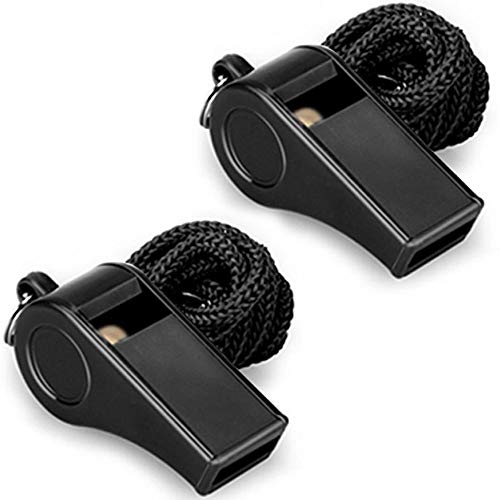
Five whistles compared for volleyball officiating, from a 120dB plastic pair to a 9.07 g electronic model with three sound settings.

By Mckinley BirdUpdated 14 min read
On this page
- Best whistle for volleyball referee use at a glance
- How I screened these five whistles
- 1. Hipat Whistle (plastic 2-pack) — Best overall
- 2. Hipat Whistle (stainless steel 2-pack) — Runner-up
- 3. JKQAGD Sports Whistles 2-pack — Best budget pick
- 4. Fya Professional Pealess Whistle — Best for beginners
- 5. UNIWA Electronic Whistle — Best premium
- Pealess, cork pea or electronic: which suits a gym?
- What the listings do not tell a new referee
- When a different whistle wins
- Who should skip this shortlist entirely?
- The verdict
- FAQ
The best whistle for volleyball referee use in this set is the Hipat plastic 2-pack, a two-piece kit with lanyards and a manufacturer claim of 120dB that gives a first-year official a primary and a spare in one buy. The stainless steel Hipat is the pick if you prefer a cork-pea metal whistle over plastic. Most guides sort whistles by loudness figures alone. That is not how you should shop.
Who this is not for: seasoned high-school and club officials who already own a Fox 40 Classic or Sonik Blast and want an upgrade. None of the five picks below is that upgrade. This shortlist is for new referees, gym-class teachers doubling as line judges, and volunteers who need a working whistle and a spare tomorrow. If you are chasing a specific USAV-approved model, buy it directly and skip this page.
Best whistle for volleyball referee use at a glance
| Pick | Style | Loudness (claim) | Price |
|---|---|---|---|
Best overall Hipat Whistle (plastic 2-pack) |
Plastic, pea | 120dB claim | Check Price |
| Steel, natural cork pea | 120dB claim | Check Price | |
Best budget pick JKQAGD Sports Whistles 2-pack |
Plastic, pea | 120dB claim | Check Price |
Best for beginners Fya Professional Pealess Whistle |
ABS plastic, pealess | 120dB claim | Check Price |
Best premium UNIWA Electronic Whistle |
Handheld electronic, 3 sounds | Adjustable | Check Price |


How I screened these five whistles
I started with the Coach & Referee Gear > Whistles category on Amazon and cut hard. Three disqualifiers did most of the work.
First, listings without published dimensions or weight. If the seller will not tell you how big the whistle is, you cannot judge whether it fits behind a mask or a card holder. That knocked out most private-label plastic whistles.
Second, single-piece packs at a price position where a two-piece pack was available. Referees drop whistles, forget them in laundry, and lend them to line judges. A backup is not optional. Four of the five picks here ship as multi-packs for that reason.
Third, listings that only described the product as "loud" without any manufacturer figure at all. All five picks here carry a manufacturer sound claim: 120dB on four of them, and an adjustable three-setting claim on the electronic UNIWA.
What survived is a set that spans the real style choices a new volleyball official has to make: plastic pea, metal cork pea, ABS pealess, and battery-powered electronic. Prices range across entry, mid and premium positions in this shortlist, and every pick sits inside the referee gear category rather than being a survival or safety whistle repurposed for sport.
A note on the keyword. Amazon's own results for this search return general referee whistles rather than volleyball-specific tools, and only the UNIWA listing names volleyball in its title. Treat "volleyball referee" as a use case you are matching to a general whistle, not a certification you can filter for.
1. Hipat Whistle (plastic 2-pack) — Best overall
The best whistle for volleyball referee work in this set is the plastic Hipat 2-pack, because it pairs a manufacturer 120dB claim with a spare in the same order at an entry price position.
Best for: a new official who wants two identical plastic whistles to keep in a kit bag Skip it if: you need a metal body or an electronic option
Within this shortlist, the plastic Hipat is the second-cheapest of the five, sells faster than every other pick here, and ships with dimensions of 0.71 x 1.81 x 0.71 in on the listing. That size sits neatly under a card holder or on a wrist lanyard without catching on a jersey during a scramble to the sideline. Hipat says the whistle reaches 120dB, which is the same figure every other pea and pealess whistle here also claims, so loudness is not the deciding factor. Availability of a matched spare is.
The trade-off is material. This is thickened plastic, not steel. In a cold indoor gym it will not chill your lips the way the stainless steel version can, but it will not carry the heft that some officials associate with a "real" referee whistle either. If that feel matters, jump one row down.
Pros:
- Two identical whistles per order for spares
- Manufacturer 120dB claim
- Compact 0.71 x 1.81 x 0.71 in body
- Sells faster than the other picks here
- Lanyard included on each whistle
Cons:
- Plastic body, not steel
- No published warranty
- Colour limited to black on the listing
2. Hipat Whistle (stainless steel 2-pack) — Runner-up
The stainless steel Hipat is the pick when you want a traditional metal whistle with a natural cork pea, in a two-piece pack.

Best for: referees who prefer the traditional feel and sound of a metal cork-pea whistle Skip it if: cold metal on the lips in a chilly gym bothers you
This is the metal counterpart to the plastic winner, from the same brand, at a mid price position in this set. Hipat lists it as food-grade stainless steel with a natural cork pea, again with a 120dB claim, and describes an adjustable gold bead on each lanyard so you can lock the length to a comfortable spot around the neck. The lanyard detail matters more than it looks: a lanyard that slides during a set changeover is a lanyard you fight instead of focus.
Where the plastic Hipat wins on price and sales pace within this shortlist, the steel version wins on material. Cork peas produce a warmer trill than the harder plastic peas, and the body will not crack if it lands on a hardwood floor. It will, however, feel cold on the lips in a January gym warm-up, and the listing does not publish dimensions the way the plastic version does, so you are trusting the standard whistle silhouette in the photo.
Pros:
- Food-grade stainless steel body
- Natural cork pea for a warmer tone
- Two whistles per pack
- Adjustable lanyard bead for length control
- Manufacturer 120dB claim
Cons:
- Cold on the lips in an unheated gym
- No published dimensions on the listing
- No stated warranty
3. JKQAGD Sports Whistles 2-pack — Best budget pick
The JKQAGD is the cheapest of the five and the only pick here with a published warranty.

Best for: a first-season official buying spares without spending much Skip it if: you want the shortest-published dimensions in the set
This one carries the most complete specification sheet in the shortlist. JKQAGD publishes a count of 2, dimensions of 0.65 x 1.75 x 0.85 in, a model number of JK1538, and a 1 year warranty. Nothing else here lists a warranty at all, which is the single strongest reason to consider this pick over the plastic Hipat despite its slower sales pace. If a whistle fails in the first season, you have a stated route to a replacement.
The body is plastic with a soft lanyard, and the manufacturer 120dB claim matches every other pea whistle here. Physical size is close to the plastic Hipat, a fraction shorter and slightly deeper, which will not be felt in the hand. The trade-off is popularity and brand familiarity: JKQAGD is a less-known name, and this listing sells the slowest of the four pea-and-pealess whistles in the set. That has no bearing on whether it works in a gym, but it does mean fewer local officials will recognise the model.
Pros:
- Cheapest of the five picks
- 1 year warranty stated on the listing
- Full dimensions published at 0.65 x 1.75 x 0.85 in
- Model number JK1538 listed for support
- Manufacturer 120dB claim
Cons:
- Slowest seller of the pea-whistle group
- Less recognised brand than Hipat
- Plastic body only
4. Fya Professional Pealess Whistle — Best for beginners
The Fya is the only pealess pick in the shortlist and ships as a 3-piece pack, which is why it lands on the beginner slot.

Best for: a new referee who wants a pealess design and a spare-heavy pack Skip it if: compact pocket size matters more than pack count
Pealess whistles have no cork or plastic ball rattling inside the chamber. That matters in two ways for a volleyball official. A pealess whistle will not jam if it gets damp from a long night in a humid gym, and the tone is more consistent from blow to blow because there is no pea to stick against the chamber wall. Fya describes the body as impact-resistant ABS plastic with a 120dB sound-power claim and lists three whistles per pack.
The catch is the size. The listing gives dimensions of 0.67 x 5.51 x 3.15 in, which appears to describe the packaged product rather than a single whistle, and there is no separate figure for the whistle itself. A new official cannot judge from that whether it will sit comfortably on a lanyard against the chest. Fya's price position is the higher of the two entry-to-premium plastic options here, and the listing is the slower seller of the group by a wide margin.
Pros:
- Pealess ABS design, no pea to jam
- 3 whistles per pack for extra spares
- Impact-resistant plastic body
- Manufacturer 120dB claim
- Lanyard on each whistle
Cons:
- Ambiguous single-whistle dimensions on the listing
- Slower seller than the other plastic picks
- No stated warranty
5. UNIWA Electronic Whistle — Best premium
The UNIWA replaces a mouth whistle with a handheld electronic unit that puts sound selection on a button.
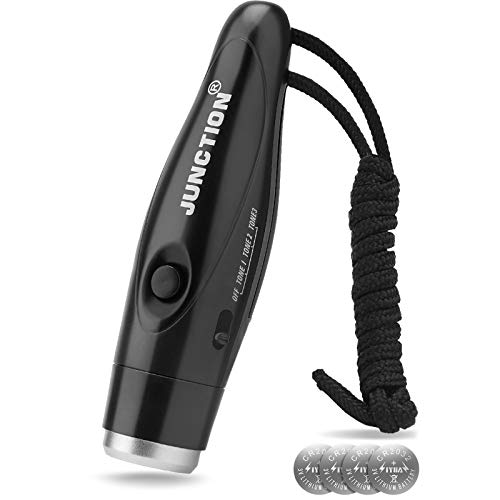
Best for: an official with a sore throat, a mask, or a preference for no mouthpiece at all Skip it if: you want the simplest possible tool with nothing to charge or fail
This is the most expensive pick here and the only one that is not a traditional mouth whistle. UNIWA lists a weight of 9.07 g, describes the unit as small, and says the whistle offers three different sound settings with adjustable volume. The listing also mentions a drawstring pouch. The one line item you will not find is battery life: the listing describes it as battery operated but publishes no run-time figure, so you are trusting that a set of batteries lasts a match without hard evidence.
The case for electronic in a volleyball gym is real. You can call a fault while wearing a mask, you can save your voice during a long tournament day, and you do not share a mouthpiece with a partner official who forgot theirs. The case against is equally real: one more thing to charge or replace batteries in, one more thing to drop and break, and a sound that some coaches and players will not immediately associate with a referee's call. The UNIWA also carries the highest price position in this set without adding a warranty statement.
Pros:
- Hands-free button operation, no mouthpiece
- Three adjustable sound settings
- Light at 9.07 g
- Drawstring pouch mentioned on the listing
- ABS shell for drop resistance
Cons:
- Highest price position in the set
- No published battery life
- Depends on batteries in the middle of a match
- No stated warranty
Pealess, cork pea or electronic: which suits a gym?
Volleyball is played indoors on a hardwood floor with a low ceiling. That environment favours a whistle that is loud enough to cut through squeaks and cheering, consistent from blow to blow, and safe against moisture from a long humid session.
- Cork pea, like the stainless Hipat. Warmest tone, traditional feel, natural cork can absorb moisture over time and eventually need replacing. Rarely a problem inside a single season.
- Plastic pea, like the plastic Hipat and the JKQAGD. Consistent volume, low cost, easy to replace when lost. The pea can stick briefly if the whistle is soaked, which is uncommon in a dry indoor gym.
- Pealess ABS, like the Fya. No pea to jam, cleaner blow-to-blow tone. Slightly harder to trill on demand for the two-tone attention call some officials use.
- Electronic, like the UNIWA. Zero mouth contact, three selectable sounds, and depends on batteries. The best pick for masked or ill officials, the worst pick for someone who wants a whistle to just work with no maintenance.
For a volleyball referee working a single site week after week, the plastic pea style is the safe default. That is why the winner of this shortlist is a plastic pea whistle.
What the listings do not tell a new referee
Three things every new official learns in their first month, that these Amazon listings never mention.
- Lanyards catch on jerseys. A whistle on a neck lanyard will occasionally snag on a diving libero's shirt when you lean in to check a ball handling call. A wrist lanyard, or a finger grip like the one common on Fox 40 CMG models, avoids that. None of these five picks ships with a finger grip, so you either accept the neck lanyard or add a finger loop separately.
- Two officials means two whistles blowing. If a first referee and a second referee both blow at the same fault, the calls should sound similar. Buying a two-pack, as three of these picks are, and giving the spare to your partner for the match is a real reason the plastic Hipat wins.
- Sound claims are marketing. Every non-electronic pick here says 120dB. That is a manufacturer claim measured under conditions the listing does not describe. Treat it as a floor, not a spec sheet you can trust to the decibel.
When a different whistle wins
The plastic Hipat is the default for a reason, but the recommendation flips in three specific cases.
- You are officiating masked or you strain your voice easily. The UNIWA electronic wins here. A button on a handheld unit removes the mouthpiece entirely, and the three sound settings let you match the acoustics of the gym.
- You want a metal whistle and a warm cork tone. The stainless steel Hipat wins. Same brand, same 120dB claim, natural cork pea, and a food-grade steel body that will outlast the plastic version.
- Price is the tie-breaker and you want a warranty. The JKQAGD wins. It is the cheapest of the five, the only pick with a stated 1 year warranty, and publishes the fullest dimensions in the shortlist. Buy it if what you want is a working whistle at the lowest price with something in writing.
For the Fya, the case is narrower. Choose it if you specifically want a pealess design and are happy to accept a 3-pack.
Who should skip this shortlist entirely?
Certified officials working USAV, NCAA or FIVB matches should. Sanctioning bodies do not certify whistles specifically, but experienced officials tend to buy Fox 40 Classic, Sonik Blast CMG or Acme Thunderer models by name, and these five picks do not compete with those directly. Buy the model your local officiating chapter uses.
Also skip if you need a whistle for open-water or outdoor sports. Every non-electronic pick here targets indoor coaching and referee use, and the UNIWA depends on batteries you do not want to trust in a lake or a rainstorm.
Finally, skip if what you actually need is a coaching whistle for practice rather than a match whistle. A gentler tone and a wrist lanyard suit practice better than a 120dB claim.
The verdict
The best whistle for volleyball referee use in this shortlist is the Hipat plastic 2-pack. It is the second-cheapest of the five, sells faster than every other pick, publishes a compact 0.71 x 1.81 x 0.71 in size, and puts a spare in the same order. For a first-season official who needs a working whistle for tomorrow and a backup for the following week, the case is straightforward.
Two conditions flip that pick. If you prefer a metal cork-pea whistle, the stainless steel Hipat is the runner-up: same brand, same 120dB claim, food-grade steel, adjustable lanyard bead. If you officiate masked, strain your voice, or simply want no mouthpiece at all, the UNIWA electronic is the premium pick, at the highest price position in the set with three adjustable sound settings and a 9.07 g body.
Buy the JKQAGD if the price is the deciding factor and a stated 1 year warranty matters to you. Buy the Fya only if you specifically want a pealess design and a three-piece pack. For everyone else starting out as a volleyball referee, the plastic Hipat is the right default.
FAQ
What loudness does a whistle for volleyball referee use need?
A whistle for volleyball referee use needs enough loudness to cut through cheering, court squeaks and coach chatter in an indoor gym. Every non-electronic pick in this shortlist carries a manufacturer 120dB claim, which is the same figure across plastic pea, steel cork pea and pealess designs. Treat that figure as a marketing floor rather than a precise spec, and prioritise consistent blow-to-blow tone over chasing a higher number.
Is an electronic whistle worth it for a volleyball referee?
An electronic whistle is worth it if you officiate masked, strain your voice over long tournament days, or share whistles with a partner official and want to avoid a shared mouthpiece. The UNIWA offers three sound settings and weighs 9.07 g on the listing. The trade-off is battery dependence with no published run time, plus the highest price position in this five-pick shortlist.
What is the difference between a pealess whistle and a cork-pea whistle?
The difference between a pealess whistle and a cork-pea whistle is what makes the sound. A cork-pea whistle, like the stainless steel Hipat, has a natural cork ball inside the chamber that produces a warm trill. A pealess whistle, like the Fya, uses shaped air passages instead, giving a more consistent tone with nothing to jam if the whistle gets damp.
Hipat plastic or Hipat stainless steel for indoor volleyball?
Hipat plastic or Hipat stainless steel comes down to feel and weather. The plastic 2-pack is the second-cheapest here, sells fastest, and publishes a 0.71 x 1.81 x 0.71 in size, which suits a new official who wants a working whistle and a spare. The stainless steel version costs more, uses a natural cork pea for a warmer tone, and can feel cold on the lips in an unheated gym.
What should a beginner volleyball referee avoid when buying a whistle?
A beginner volleyball referee should avoid buying a single whistle with no spare, a listing that publishes no dimensions or weight, and any product that leans on decibel marketing without describing pea type or body material. Four of the five picks here ship as multi-packs for that reason. Also avoid outdoor survival whistles repurposed for court use, since they are tuned for range rather than gym acoustics.
For a first-season volleyball referee, the plastic Hipat 2-pack is the whistle to order tonight and use at your next match. It puts a primary and a spare in your kit bag in one purchase, gives you a compact body that sits cleanly on a lanyard, and matches the same 120dB manufacturer claim every other pea whistle here makes. Once you have officiated a full season and know whether you want a metal body, a pealess tone or an electronic unit, upgrade on evidence rather than on guesswork. The right first whistle is the one that lets you focus on the calls, not the tool making them.