Best Volleyball Equipment: MangoStar Leads the Set
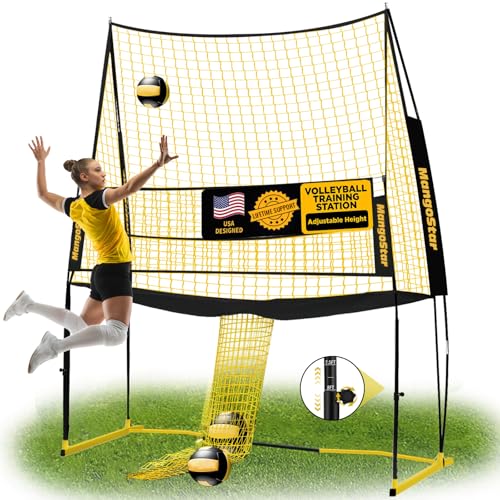
A ranked look at six volleyball equipment picks, from a 25.8 lb backyard net system to a solo spike trainer with an 88 lb sandbag base. Named winner, named runner-up, honest trade-offs.

By Mckinley BirdUpdated 16 min read
On this page
- How I narrowed six listings down to a ranked set
- Best volleyball equipment at a glance
- Net systems vs solo trainers: which one do you actually need?
- What the height range on a volleyball net really means
- 1. MangoStar Volleyball Training Equipment — Best overall
- 2. AugFir Volleyball Setter & Spike Trainer — Best premium
- 3. SPOYNAL Volleyball Training Equipment — Best for families
- 4. Tandem Sport Volleyball Elbow Pads — Most versatile
- 5. focopot Volleyball Serve Trainer — Best warranty
- 6. Inscool Volleyball Training Aid — Best budget pick
- How much does a stable base matter for solo practice?
- What the listings do not tell you about volleyball equipment
- The verdict
- FAQ
The best volleyball equipment in this set is the MangoStar Volleyball Training Equipment, a 25.8 lb backyard net system that adjusts from 6.5 to 8 ft with a quick-release lock. If you practice alone and want a stable spike station instead of a full net, the AugFir Volleyball Setter and Spike Trainer wins, with a 93 to 126 inch range and an 88 lb sandbag base.
How I narrowed six listings down to a ranked set
I pulled six volleyball equipment listings across two clear categories: full backyard net systems and solo training aids. Then I lined up the published specifications side by side. Height ranges, base weights, warranty terms, and set contents were the four columns I cared about most. Marketing bullets went in a separate pile and were treated as claims, not measurements.
Three listings were disqualification-first candidates that survived. One net system published no weight. Two solo trainers published almost no dimensional data at all. That thinness of data shaped the ranking. A pick that publishes only a colour and a model number cannot lead the list, no matter how loud the bullet points are.
What I could compare across the whole set:
- Warranty terms, published on five of the six picks.
- Net height range, published on both full net systems and on the AugFir spike trainer.
- Weight, published on two of the six picks.
- Set contents, published in bullet form on all six.
What I could not compare across the set:
- Price, which changes hourly on Amazon.
- Ratings or buyer feedback, which are not in the data I work from.
- Real-world durability, because none of these listings publishes an impact rating.
That left specifications and set composition as the deciding evidence, which is exactly the shape of a good ranking.
Best volleyball equipment at a glance
| Pick | Type | Height / key spec | Price |
|---|---|---|---|
Best overall MangoStar Volleyball Training Equipment |
Full net system | 6.5 to 8 ft, 25.8 lb | Check Price |
Best premium AugFir Volleyball Setter & Spike Trainer |
Solo spike trainer | 93 to 126 in, 88 lb base | Check Price |
Best for families SPOYNAL Volleyball Training Equipment |
Full net system | 7 to 8 ft, 11 x 8 ft | Check Price |
Most versatile Tandem Sport Volleyball Elbow Pads |
Protective gear | 3.21 oz, pack of 2 | Check Price |
Best warranty focopot Volleyball Serve Trainer |
Solo serve trainer | Fits 20 to 46 in waist | Check Price |
Best budget pick Inscool Volleyball Training Aid |
Solo drill aid | Standard, backpack included | Check Price |


Net systems vs solo trainers: which one do you actually need?
The single biggest mistake in shopping for best volleyball equipment is buying the wrong category. A full net system and a solo spike trainer solve different problems, and the money you spend on one does not carry over.
A net system is what you want if two or more people want to rally, if the goal is a pickup game in a backyard, or if the group needs a real net to hit over. Both the MangoStar and the SPOYNAL are 11 by 8 ft systems.
A solo trainer is what you want if the goal is repetitions without a partner. Serve trainers with an elastic cord return the ball. Spike trainers hold a ball at a fixed height so you can hit it over and over.
Buy the net first if a household of players will use it. Buy the trainer first if one person is trying to sharpen one skill.
What the height range on a volleyball net really means
Adjustable height sounds like a checkbox feature. It is actually the specification that decides who can play on your net.
- 6.5 ft is roughly the height for youth and women's outdoor play in some formats.
- 7.3 ft is a common women's indoor regulation figure.
- 8 ft is a common men's indoor regulation figure.
The MangoStar publishes a range of 6.5 to 8 ft, which covers all three of those points. The SPOYNAL publishes 7 to 8 ft, which covers the two adult heights but starts higher off the ground. If children will play on the net, that half-foot at the bottom of the range matters.
The AugFir is a different tool, and its 93 to 126 inch range is for a spike trainer, not a net. That range translates to roughly 7.75 to 10.5 ft, which is well above regulation net height because you are hitting down over the top of it. Match the range to the drill: net height for rallying, higher for spiking practice.
1. MangoStar Volleyball Training Equipment — Best overall
A 25.8 lb net system with the widest published height range in the set and a tool-free setup.
Best for: backyard players who want one adjustable net for pickup games and drills Skip it if: you only need a solo spike or serve trainer
The MangoStar wins on the two specifications that decide a backyard net: height range and structural weight. Its 6.5 to 8 ft range is the widest of the two full net systems here, which means a household with kids and adults can share one setup. The 25.8 lb total weight sits between a flimsy party net and a permanent post system, and MangoStar's listing pairs that with a quick-release lock and a claim of powder-coated, weather-resistant construction.
The netting itself is described as 5-ply knotless with double-stitched seams, and the assembly is billed as tool-free. Both claims are the manufacturer's, so treat them as promises to verify on delivery rather than measurements. A 1-year warranty is published, matching the two other picks with published warranty terms. This is the second-most expensive pick in the set, but the price position buys the wider height range and the higher published weight, which is what makes it the better choice for a mixed-age household than the SPOYNAL.
The trade-off is bulk. At 25.8 lb this is not a net you toss in a backpack, and only two sellers list it, which can matter for restock timing.
Pros:
- Widest published height range in the set, 6.5 to 8 ft
- Heaviest published net system here at 25.8 lb
- 1-year warranty published
- 5-ply knotless netting claim
- Tool-free setup claim
Cons:
- Heaviest pick in the set to transport
- Only two sellers list it
- The most expensive full net system here
2. AugFir Volleyball Setter & Spike Trainer — Best premium
A solo spike station with a 93 to 126 inch range and an 88 lb sandbag base.

Best for: solo hitters who want a stable spike station on grass, sand or hardwood Skip it if: you have no space for an 88 lb sandbag base
The AugFir is the only pick in this set built specifically for solo spike practice at hitting height. Its published range of 93 to 126 in gives you a spike target roughly 7.75 to 10.5 ft off the floor, which covers everything from a junior player learning approach timing to an adult drilling attack angles. The 88 lb sandbag base is the number that separates this from cheaper solo aids: it is heavy enough, per the listing, to stay planted through repeated hits.
AugFir describes a dual-function design that lets you use it for spiking and, when you detach the central hitting device, as a ball retriever. The listing also claims the trainer works on indoor courts, grass and sand. A 1-year warranty is published. Three sellers list it, the highest offer count in this set, which usually means better restock reliability than the two-seller MangoStar.
This is the most expensive pick in the set, and the sandbag base makes it the least portable. If you cannot dedicate a corner of a garage or a yard to it, the setup and teardown will erode how often you actually train. The trade-off buys you a spike-specific tool no other pick here delivers.
Pros:
- 93 to 126 in height range for spike-height practice
- 88 lb sandbag base for stability
- Dual-function spike and ball-retriever design claim
- Three sellers list it
- Works on multiple surfaces per the listing
Cons:
- The most expensive pick in the set
- 88 lb base is not casually movable
- Only useful for hitting drills, not rallies
3. SPOYNAL Volleyball Training Equipment — Best for families
An 11 by 8 ft net system with a twist-lock height mechanism and a 600D Oxford carry bag.

Best for: families who play casual games and want tool-free setup Skip it if: you want the widest possible height range for youth players
The SPOYNAL is the second full net system here and the family-friendly one. Its 11 by 8 ft footprint matches the MangoStar's, and its 7 to 8 ft height range covers women's and men's indoor regulation heights. The published dimensions of 0.1 by 96 by 168 in describe the packed footprint, so a corner of a garage or a shed will hold it.
SPOYNAL's listing highlights four heavy-duty metal stakes, UV-resistant 5-ply knotless netting, and reinforced fiberglass poles. The setup is described as tool-free and packs into a 600D Oxford carry bag. A 1-year manufacturer warranty is published. All of that is the manufacturer's copy, and the specifications support a net that is meant to travel from a backyard to a park to a beach.
Where it loses to the MangoStar is the bottom of the height range. Starting at 7 ft means youth players cannot use it at their regulation height without going below the adjustment floor. The listing also does not publish a total weight, which is the biggest gap in its data. If you know your household is adults only and the price gap matters, this is a sensible mid-range pick.
Pros:
- 11 by 8 ft footprint matches the overall winner
- Twist-lock height mechanism claim
- Fiberglass poles per the listing
- 600D Oxford carry bag included
- 1-year manufacturer warranty published
Cons:
- Higher height floor than the MangoStar
- No published total weight
- Only one seller lists it
4. Tandem Sport Volleyball Elbow Pads — Most versatile
A 3.21 oz pair of white elbow pads meant to be worn under any of the other gear here.

Best for: players who dive on hardwood and want low-bulk elbow protection Skip it if: you need knee pads or full arm protection
The Tandem Sport pads are the odd pick out, and that is exactly why they belong on the list. Every other product here is a training aid or a net. These are the protective gear a player actually wears while using the others. A pair weighs 3.21 oz and ships as a count of two, which is one pair. The sales rank of 84 in their protective-gear category is the lowest number in this set by a wide margin, meaning they move faster than any other pick here.
Tandem Sport's listing describes them as non-bulky and machine washable, and calls out use by Olympic, college, high school, club and recreational athletes. Take that as brand positioning rather than a spec. The concrete points are the weight, the count, and the machine-washable claim, all of which matter for a piece of gear that gets sweaty and sees the floor.
The trade-off is scope. Elbow pads do not protect knees, which are the more commonly injured joint on a volleyball dive. They also do not have a published thickness or padding grade in the listing. If you need volume, wear them with dedicated knee pads.
Pros:
- 3.21 oz per pair
- Pack of two included
- Machine washable per the listing
- Lowest sales rank in the set, meaning it turns over fastest
- Non-bulky construction claim
Cons:
- Elbow protection only, not knees
- No published padding thickness
- Warranty must be requested from customer service
5. focopot Volleyball Serve Trainer — Best warranty
An elastic-cord serve trainer with an adjustable waistband that fits 20 to 46 inch waists.

Best for: servers who lose too many balls to chasing Skip it if: you already play with a partner who can shag balls
The focopot solves one problem: ball chasing. It is a waist-mounted elastic cord with a ball pouch, and the listing describes an adjustable waistband that fits 20 to 46 in and an elastic cord that extends to 4.1 to 8 ft. That range means the same trainer covers a mid-sized child and a large adult, which is unusual for a fitted piece of gear.
The kit includes a ball pouch with retractable cord, an adjustable waistband, two hand straps, and a portable backpack. The pouch is described as fitting any size volleyball, basketball or soccer ball. A 1-year warranty is published, which is what earns the label here: it is the only solo aid in this set that publishes both a warranty and a specific size range. Sales rank is 7,967 in volleyball training equipment, meaning it moves reasonably in its category.
The trade-off is scope. This trains one skill, serving, and it does not help with spiking, setting or blocking. It is also less useful the moment you have a regular practice partner, because a human retriever is faster than an elastic cord. As a supplement to a net, though, it is the cheapest way to double your serving reps.
Pros:
- Waistband fits 20 to 46 in
- Elastic cord extends to 4.1 to 8 ft
- Includes backpack, hand straps and ball pouch
- Ball pouch fits multiple ball types
- 1-year warranty published
Cons:
- Trains serving only
- Loses value if you already have a partner
- No published unit weight
6. Inscool Volleyball Training Aid — Best budget pick
A solo drill aid with a drawstring backpack and the shortest published spec sheet in the set.

Best for: beginners who want a low-cost solo drill aid Skip it if: you want published dimensions or weight before buying
The Inscool is the cheapest of the six and the one with the thinnest published data. The listing publishes a size of "Standard", a colour of black, and a model number, and stops there. Everything else about it is a bullet-point claim: adjustable straps, sturdy construction, simulated game situations, a drawstring backpack for storage. The sales rank of 5,532 in volleyball training equipment is the second-lowest of the solo aids, so it is a listing that does move.
Inscool markets it as a serve, set and spike aid for players of all levels. Without a published weight, dimensions or warranty, that is a promise to treat with more caution than the focopot's spec sheet earns.
Where this pick genuinely earns its slot is as a first purchase for a player who is not sure yet how serious they will get. It is the lowest price position in this set, and the drawstring backpack means it stores in a locker or a school bag. If you outgrow it in a season, you have not spent much learning what you actually need.
The trade-off is transparency. You are buying on brand claims rather than measured specifications, which is the single largest gap in this set.
Pros:
- Cheapest of the six
- Drawstring backpack included
- Adjustable straps per the listing
- Marketed for multiple skill drills
- Second-lowest sales rank among the solo aids here
Cons:
- No published weight, warranty or dimensions
- Fewer published specifications than any other pick
- Only one seller lists it
How much does a stable base matter for solo practice?
For a spike or serve trainer, base weight is the specification that decides how often you actually use it. A light base tips, drifts or has to be re-anchored after every third hit, and that is how a piece of best volleyball equipment ends up in a closet.
The AugFir publishes an 88 lb sandbag base, which is by far the heaviest anchor in this set. That number is why it earns the premium slot. On grass, sand or a hardwood floor, an 88 lb base is not going to walk under a normal spiking load.
By contrast, the focopot anchors to the player's waist, not to the floor. That is fine for serving, where the cord pulls the ball back toward you. It would not work for spiking, where you need a fixed target.
If your practice space is a garage floor or a driveway, prioritise base weight. If your practice space is your body, the focopot's design is the right shape. Match the anchor to the drill, and the equipment stays out on the floor rather than back in the box.
What the listings do not tell you about volleyball equipment
Five things are missing from every Amazon listing for best volleyball equipment, and they are worth naming so you can ask before you buy.
- Pole diameter on the net systems. Both the MangoStar and the SPOYNAL describe reinforced poles, but neither publishes a millimetre or inch measurement. Thicker poles bend less in wind.
- Netting mesh size. 5-ply knotless is a construction claim, not a mesh figure. Standard volleyball mesh is roughly 4 inches square. Confirm before use in competitive play.
- Replacement parts availability. None of these listings mention spare stakes, spare poles or replacement cords. A cheap net whose stake snaps in month three is not cheap.
- Assembly time in minutes. "Tool-free" and "in minutes" are the phrases every listing uses. Neither commits to a number.
- Ball type compatibility on the trainers. The focopot pouch is described as fitting any size, but the Inscool's compatibility is not published.
Ask the seller before you commit, or budget for a returns window. A listing that answers these questions in a follow-up message is worth more than a listing that does not.
The verdict
The MangoStar Volleyball Training Equipment is the best volleyball equipment in this set for a household that wants one purchase to serve the widest audience. It publishes a 6.5 to 8 ft height range, a 25.8 lb total weight, a 1-year warranty, and 5-ply knotless netting, which is the fullest spec sheet of any pick here. That combination is why it leads.
Two conditions flip the recommendation. First, if the goal is solo spike practice rather than a rally net, the AugFir Volleyball Setter and Spike Trainer wins on the strength of its 93 to 126 in range and 88 lb sandbag base. It is the only pick built for that specific drill. Second, if the household is adults only and the height floor of 7 ft is fine, the SPOYNAL is a lighter-data alternative with the same 11 by 8 ft footprint.
The Tandem Sport elbow pads earn a place regardless of which of the above you pick, because they are the only piece of protective gear here. The focopot and the Inscool sit below the top tier for the same reason: they train one skill and publish thinner specifications. That is not a knock on either, just the honest cutoff.
FAQ
What is the best volleyball equipment for a backyard?
The best volleyball equipment for a backyard in this set is the MangoStar net system, because its 6.5 to 8 ft height range covers youth, women's and men's regulation heights on one piece of gear. Its 25.8 lb published weight is heavy enough to stay planted through a pickup game and light enough for one adult to carry from garage to yard.
Is a solo volleyball trainer worth it?
A solo volleyball trainer is worth it if you practice more often than you play. The focopot and Inscool solo aids train serving and general skills without a partner, and the AugFir spike trainer lets you hit at 93 to 126 in without resetting a ball between reps. If you already have a regular practice partner, the value drops sharply because a human retriever is faster than an elastic cord.
What height should a volleyball net be set at?
Volleyball net height depends on the format. Roughly 7.3 ft is a common women's indoor regulation figure, and roughly 8 ft is a common men's indoor regulation figure. Youth formats can go as low as 6.5 ft. The MangoStar covers all three points with its 6.5 to 8 ft range. The SPOYNAL covers only the two adult heights, starting at 7 ft.
MangoStar or AugFir: which is the better pick?
MangoStar or AugFir depends on whether you want a net or a spike station. The MangoStar is an 11 by 8 ft net system for rallies. The AugFir is a solo spike trainer with an 88 lb sandbag base for hitting drills. They do different jobs. If your household plays games, buy the MangoStar first. If one player is drilling attacks alone, buy the AugFir.
What is the biggest mistake when buying volleyball equipment?
The biggest mistake when buying volleyball equipment is choosing between categories by price rather than by use case. A cheap net will not train a spike, and a cheap spike trainer will not host a game. Decide first whether you need a rally net, a solo aid or protective gear, then compare inside that category. That single step eliminates most returned purchases.
Volleyball equipment rewards buyers who match the tool to the drill. Start with the MangoStar if a household will share the net, because its published height range and weight give you the most flexibility per purchase. Add the Tandem Sport elbow pads regardless, because they are the only protective gear here and the one item on this list you will feel the difference of the first time you dive. If you already own a net and want a specific skill sharpened next, the AugFir handles spikes and the focopot handles serves. Pick one gap at a time, and let the specifications, not the marketing bullets, tell you which.