Best Food Processor for Students: Hamilton Beach Wins
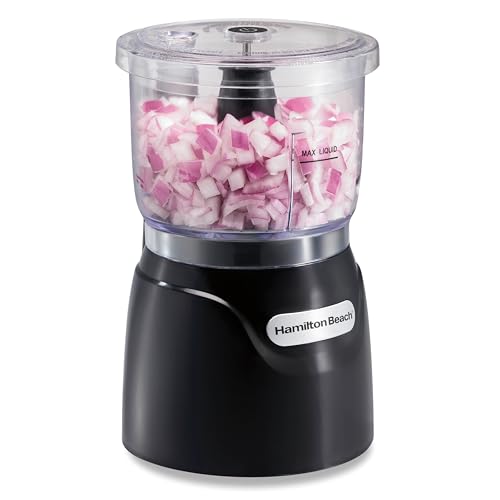
A ranked look at five food processors through a student lens: counter footprint, weight, bowl size and cleanup. The 2.1 lb Hamilton Beach leads, with three clear cases where a bigger bowl wins.

By Mckinley BirdUpdated 15 min read
On this page
- Best food processor for students at a glance
- How I screened these five listings
- 1. Hamilton Beach 3 Cup Electric Vegetable Chopper & Mini — Best overall
- 2. Cuisinart Mini Food Processor — Best for beginners
- 3. BLACK+DECKER Food Processor and Vegetable Chopper — Best for families
- 4. Hamilton Beach Food Processor & Vegetable Chopper — Best for heavy use
- 5. Ninja Professional Plus Food Processor — Best premium
- Will it actually fit on a dorm counter?
- Does a food processor for students need 1000 watts?
- What the listings don't tell you about cleanup
- When a bigger bowl is the better buy
- The verdict
- FAQ
The best food processor for students is the Hamilton Beach 3 Cup Electric Vegetable Chopper, because at 2.1 lb and 8.54 x 5.9 x 5.2 in it fits in a cupboard the size of a shoebox. If you're cooking for four housemates instead of yourself, the 9-cup Ninja Professional Plus is the better buy. This category isn't for everyone, though. If your kitchen already has a decent knife and a chopping board, and you cook once or twice a week, you can skip the whole thing.
Best food processor for students at a glance
| Pick | Bowl capacity | Footprint | Price |
|---|---|---|---|
| 3 cups 350W claim |
8.54 x 5.9 x 5.2 in 2.1 lb |
Check Price | |
Best for beginners Cuisinart Mini Food Processor |
3 cups / 24 oz 250W claim |
9.25 x 5 x 7 in 2.2 lb |
Check Price |
Best for families BLACK+DECKER Food Processor and Vegetable Chopper |
8 cups 450W claim |
15.2 x 8.9 x 8.7 in weight not listed |
Check Price |
Best for heavy use Hamilton Beach Food Processor & Vegetable Chopper |
10 cups 450W claim |
16 x 8.5 x 10 in 6.2 lb |
Check Price |
Best premium Ninja Professional Plus Food Processor |
9 cups / 72 oz 1000W peak claim |
16 x 9.88 x 7.76 in 7.65 lb |
Check Price |


How I screened these five listings
Amazon doesn't sell a machine labelled for undergraduates. There's no student mode, no dorm certification, no listing in this set that mentions campus living at all. So the qualifier in the phrase best food processor for students is something you have to judge yourself, using specifications the manufacturers do publish.
I lined those specifications up side by side and screened on three of them:
- Stored footprint. The longest dimension, because that's what decides whether it lives on the counter or in a cupboard.
- Weight. Anything you carry up three flights in September and back down in June needs a published number.
- Cleanup parts count. Every extra disc is another item in a shared sink.
That screen splits the five picks cleanly into two groups. Two machines sit under 2.5 lb with a longest side under 10 in. Three sit above 6 lb with a longest side of 15.2 in or more. There's no middle ground in this set, which makes the decision unusually simple.
What I cut from the shortlist: nothing on capability grounds. All five chop. The heavy three add slicing and shredding discs, and the 9-cup Ninja adds a dough blade. Capability wasn't the constraint. Space was.
1. Hamilton Beach 3 Cup Electric Vegetable Chopper & Mini — Best overall
The smallest and lightest machine here, and the one buyers in this set choose most often.
Best for: one or two people cooking in a tight dorm or studio kitchen Skip it if: you cook in batches for a shared house
At 2.1 lb, this is the lightest of the five. Its 8.54 x 5.9 x 5.2 in body is also the shortest, and that 5.2 in height matters more than the numbers suggest: it clears the underside of most wall cabinets, so it can sit out permanently without eating your prep space. Every other machine here needs at least 15.2 in of counter run.
The controls are the simplest in this set. Hamilton Beach describes a patented stack-and-press design where you press the lid to chop and release to stop, with no buttons and no speed dial. Fewer parts, fewer things to lose in a shared kitchen. The brand claims a 350W motor and stainless steel blades rated for onions, carrots and nuts, plus dishwasher-safe bowl, lid and removable blades.
The trade-off is capacity. Three cups handles a single portion of salsa or a small batch of hummus. It won't slice or shred, because there are no discs. Against the 10-cup Hamilton Beach, this is a machine that does one job in a small volume, and it's the cheapest of the five.
Pros:
- Lightest here at 2.1 lb
- Shortest body in the set at 5.2 in tall
- Cheapest of the five
- One-year warranty published
- Bowl, lid and blades all dishwasher safe
Cons:
- 3 cups is the joint-smallest capacity here
- No slicing or shredding discs at all
- Lowest claimed wattage of the four machines that publish one
- Single-action lid press means no speed control
2. Cuisinart Mini Food Processor — Best for beginners
The longest published warranty in this set, at 18 months, in a body barely heavier than the winner.

Best for: first-time cooks who want simple two-button control and a longer warranty Skip it if: you need slicing or shredding discs
This is the only pick here with a warranty longer than a year. Cuisinart states a limited 18-month warranty on a BPA-free body, which is six months more cover than the four other listings offer, and that's the clearest reason to pick it over the Hamilton Beach mini. At 2.2 lb it's within a tenth of a pound of the winner, and its 9.25 x 5 x 7 in shape is the narrowest here at 5 in wide.
Cuisinart describes a 250W motor with a patented reversible stainless steel blade and an auto-reversing SmartPower action, giving you two modes: chop with the sharp edge, grind with the blunt one. That's a genuinely useful split for a first-time cook, because grinding hard cheese and chopping herbs really do want different edges. The bowl holds 24 oz and both bowl and lid go in the dishwasher, while the base wipes clean.
Against the winner, you're paying more for a longer warranty and a lower claimed wattage. It's the second-cheapest of the five and the second-smallest.
Pros:
- 18-month warranty, longest in this set
- Reversible chop and grind blade
- Narrowest body here at 5 in
- 2.2 lb, second-lightest of the five
- Dishwasher-safe bowl and lid
Cons:
- 250W claim is the lowest published figure here
- 24 oz bowl limits you to single portions
- No discs, so no slicing or shredding
- Costs more than the winner for less claimed power
3. BLACK+DECKER Food Processor and Vegetable Chopper — Best for families
An 8-cup bowl with a reversible slice and shred disc, and the least complete specification sheet in this set.

Best for: shared apartment kitchens doing weekly batch prep Skip it if: you need published weight and warranty figures before buying
The 8-cup bowl is the step up that actually changes what you can cook. BLACK+DECKER describes it as room for salsa, nut butter and hummus in one go, which is the difference between prepping a single meal and prepping a week of lunches for a shared flat. The listing also claims a reversible metal disc for slicing vegetables and shredding cheese, and a 450W motor with low, high and pulse settings on an easy-clean touchpad.
The assembly design is worth flagging. BLACK+DECKER says the bowl sets onto the base and the lid does the locking, which removes the twist-and-align step that makes bigger processors annoying. At 15.2 x 8.9 x 8.7 in it needs a proper stretch of counter.
Here's the honest problem: this listing publishes fewer specifications than any other pick here. No weight. No warranty. No colour beyond black, and a size described only as "Large". For a machine at the middle price position, that's a thinner sheet than the cheaper Cuisinart offers, and it's the slowest seller of the five.
Pros:
- 8-cup bowl suits shared-kitchen batch prep
- Reversible slice and shred disc included
- Lid-locking assembly, no twist to align
- Touchpad with low, high and pulse
- Mid price position, not the most expensive here
Cons:
- No published weight anywhere on the listing
- No stated warranty
- Slowest seller of the five
- 15.2 in longest side needs dedicated counter space
4. Hamilton Beach Food Processor & Vegetable Chopper — Best for heavy use
The largest bowl in this set at 10 cups, with a built-in scraper that cuts the stop-and-spatula routine.

Best for: cooks running the machine several times a week on tough ingredients Skip it if: your counter is shorter than 16 in of clear run
Ten cups is more capacity than any other pick here, including the premium Ninja. Hamilton Beach claims five processing functions from two attachments, including a stainless steel slicing and shredding disc, plus a 450W motor and two speeds with pulse. The feature that stands out is the built-in bowl scraper: the brand says you move it side to side while the machine runs, so you don't stop and reach for a spatula. On a machine you use three or four times a week, that's a real time saver.
The large feed chute is the other practical claim, said to reduce pre-cutting. Combined with the biggest bowl in the set, that's a machine built around throughput rather than portion size.
It weighs 6.2 lb and measures 16 x 8.5 x 10 in, so it's a counter resident, not a cupboard item. Against the 9-cup Ninja it gives up the dough blade and the preset programs, and against the two minis it gives up any chance of being stored out of sight. Hamilton Beach publishes a one-year warranty.
Pros:
- Largest capacity here at 10 cups
- Built-in bowl scraper works while running
- Slicing and shredding disc included
- Two speeds plus pulse
- Lighter than the premium pick at 6.2 lb
Cons:
- 16 in longest side, joint-largest footprint here
- 6.2 lb makes it awkward to move between rentals
- No dough blade or preset programs
- Second-most expensive of the five
5. Ninja Professional Plus Food Processor — Best premium
The highest claimed power and the only pick with a dough blade, at the highest weight and price position in this set.

Best for: dough making and the largest batches in this set Skip it if: you're moving between rentals every year
The Ninja is the outlier on capability. Its 72 oz bowl is a 9-cup working volume, and Ninja claims a 1000-peak-watt motor, more than double the 450W figure on the two mid-size picks. It's also the only machine here with a dough blade, which Ninja says handles bread, pizza and pastry mixes. If you bake, nothing else in this comparison competes.
The four Auto-iQ preset programs are the other separator. Ninja describes one-touch control for chopping, slicing, pureeing and dough, which is a different interaction model from the manual speed switches on the other four. The listing gives a 2020 release date and a model number of BN601.
The cost is physical. At 7.65 lb it's the heaviest pick by 1.45 lb, and its 16 x 9.88 x 7.76 in body is the widest here at 9.88 in. It's also the most expensive of the five, which buys you dough capability and claimed power rather than more bowl volume than the 10-cup Hamilton Beach. For anyone packing a car twice a year, that weight is a real argument against it.
Pros:
- Highest claimed power in the set at 1000 peak watts
- Only pick with a dough blade
- Four Auto-iQ one-touch programs
- 72 oz bowl handles the biggest batches
- Model and release year both published
Cons:
- Heaviest here at 7.65 lb
- Widest body in the set at 9.88 in
- Most expensive pick for less bowl volume than the 10-cup option
- Only one seller listing besides the main one
Will it actually fit on a dorm counter?
Measure before you buy. A typical dorm kitchenette gives you a strip of counter between a sink and a hob, and the cabinet above it usually hangs about 18 in off the surface. Two numbers decide whether a machine works there.
- Longest side. The two minis are 8.54 in and 9.25 in. The three larger picks are 15.2 in, 16 in and 16 in. That's the whole story: roughly half a footprint versus a full one.
- Height. The Hamilton Beach mini is 5.2 in tall and the Cuisinart is 7 in. The Ninja is 7.76 in, the BLACK+DECKER 8.7 in and the big Hamilton Beach 10 in. Anything above about 8 in stops sliding under a cabinet comfortably, and you also need clearance to lift the lid off.
For a food processor for students in a shared house, there's a third number nobody prints: cupboard depth. Standard base cabinets run about 24 in deep, so all five fit inside one. The question is whether you'll actually bother lifting 7.65 lb out and back every time you want chopped onion. In practice, machines over about 6 lb stay on the counter permanently. Plan for that.
Does a food processor for students need 1000 watts?
No. Claimed wattage is the specification most buying guides lead on, and it's the one that misleads most in this category. Four of the five picks publish a figure: 250W, 350W, 450W and 1000 peak watts. Note the word peak on the Ninja. A peak figure describes a momentary maximum, not sustained output, so it isn't directly comparable to the flat wattage numbers on the others.
What actually decides whether a machine copes is the match between motor and bowl. The Cuisinart pairs 250W with 24 oz. The Ninja pairs 1000 peak watts with 72 oz, three times the volume. Watts per cup barely move between them, which is why both handle their own bowl fine and neither would handle the other's.
For student cooking, the honest ranking of what matters is:
- Bowl size against how many people you cook for
- Number of parts you have to wash
- Stored footprint
- Claimed wattage
Wattage is fourth. Chopping herbs, onions and nuts is not a demanding job. The machines that struggle are the ones asked to fill a bowl too big for their motor, and none of these five is mismatched that way.
What the listings don't tell you about cleanup
Cleanup is where a cheap food processor for students earns or loses its place in the cupboard, and it's the area these listings cover least consistently.
The two minis are explicit. Hamilton Beach states the bowl, lid and removable blades are all dishwasher safe. Cuisinart states the bowl and lid are dishwasher safe and the motor base wipes clean with a damp cloth. Those are three or four items per wash, and the removable blade on the Hamilton Beach matters because a fixed blade is what makes small choppers awkward to rinse.
The three larger picks say much less. None of their listings makes a clear dishwasher claim in the material published, and all three add a slicing and shredding disc to the wash pile. A disc is the single most annoying item to clean in this whole category, because you're wiping a sharp reversible plate by hand in a sink you share with four other people.
Count parts before you count features. A 3-cup machine gives you a bowl, a lid and a blade. A 10-cup machine gives you a bowl, a lid, an S-blade, a disc and a pusher. That difference decides whether the thing gets used on a Tuesday night or stays in the box.
When a bigger bowl is the better buy
Three conditions flip the recommendation away from the 3-cup winner.
- You cook for three or more people at once. Three cups is roughly one portion of dip. At four or more servings you're processing in batches, which is slower than using a knife. Move to the 8-cup BLACK+DECKER or the 10-cup Hamilton Beach.
- You batch-prep on Sundays. If you're making a week of lunches in one session, the 10-cup Hamilton Beach with its built-in scraper and large feed chute is built for exactly that volume. Its 16 in footprint stops being a problem when the machine never gets put away.
- You bake. Only the Ninja publishes a dough blade. If pizza dough or bread is part of your routine, no amount of chopping capacity substitutes.
There's also a case for skipping the category. If you cook simple meals twice a week and own a sharp knife, a food processor is a machine you'll clean more often than you use. The threshold I'd use: three or more cooking sessions a week involving chopped vegetables, or any recipe you avoid because of the prep. Below that, spend the money on the knife.
The verdict
If you're cooking for one in a dorm room or studio, the Hamilton Beach 3 Cup Electric Vegetable Chopper is the food processor for students to buy. It's 2.1 lb, 5.2 in tall, the cheapest of the five, and it carries a one-year warranty with a dishwasher-safe bowl, lid and removable blade. Nothing else here disappears into a cupboard as easily.
If you're cooking for a shared house, the 10-cup Hamilton Beach Food Processor is the pick. Its bowl is the largest in this comparison, its built-in scraper works while the motor runs, and it includes a slicing and shredding disc the minis don't offer at all. It weighs 6.2 lb and needs 16 in of counter, so treat it as a permanent fixture.
The cutoff is three people. Below that, the 3-cup mini does everything you'll ask of it and stores out of sight. At three or above, batching in a 3-cup bowl becomes slower than chopping by hand, and the 10-cup machine pays back its footprint immediately.
Two side notes. The Cuisinart's 18-month warranty is the longest here and worth the small step up if cover matters more than claimed power. The Ninja earns its price only if you make dough, because its 72 oz bowl holds less than the 10-cup Hamilton Beach.
FAQ
Is a food processor for students worth buying at all?
A food processor for students is worth buying if you cook three or more times a week with chopped vegetables. Below that, a sharp knife and a board do the same work with one item to wash. The 3-cup Hamilton Beach is light enough at 2.1 lb that it costs you almost no storage space, which lowers the bar considerably.
What's the cheapest option in this comparison?
The cheapest option here is the Hamilton Beach 3 Cup Electric Vegetable Chopper, which also happens to be the pick I'd recommend to most people. The Cuisinart Mini sits just above it and adds six months of warranty cover. The two most expensive picks are the 10-cup Hamilton Beach and the Ninja Professional Plus, both of which are counter-permanent machines.
Will a 3-cup food processor fit under a kitchen cabinet?
A 3-cup food processor fits under almost any wall cabinet. The Hamilton Beach mini is 5.2 in tall and 8.54 in on its longest side, and the Cuisinart is 7 in tall with a 5 in width. Compare that to the 10 in height of the large Hamilton Beach, which needs open space above it for lid removal.
Hamilton Beach 3-cup or Cuisinart Mini: which should I choose?
Choose between these two on warranty and blade design. The Cuisinart publishes an 18-month warranty and a reversible chop-and-grind blade, versus one year and a single-action lid press on the Hamilton Beach. The Hamilton Beach claims 350W to Cuisinart's 250W, is 0.1 lb lighter, and costs less. Both hold 3 cups.
What mistake do first-time food processor buyers make?
The mistake first-time buyers make is choosing on wattage and bowl size, then discovering the machine has five parts to hand-wash. Discs are the worst offenders. Count the components in each listing before you compare motors, because a machine that takes ten minutes to clean gets used once a month regardless of how powerful it is.
Start by measuring the clear counter run in your kitchen and the height to the cabinet above it. If that gap is under 10 in of usable width, the decision is already made: the 3-cup Hamilton Beach is the only pick in this set that lives comfortably in that space, and at 2.1 lb it moves house without a second thought. Everything else here asks for 15 in or more of dedicated counter and a permanent spot. Get the footprint right first, and the capability question sorts itself out by how many people you actually cook for.