Best Duck Calls on the Market for Every Species
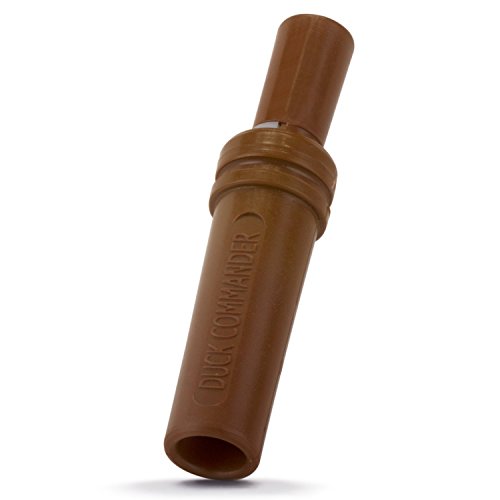
Five duck calls, one clear winner, and a plain answer to the question every waterfowl hunter asks: which call actually fits the ducks you hunt?

By Mckinley BirdUpdated 13 min read
On this page
- How I narrowed five duck calls to a verdict
- Best duck calls on the market at a glance
- Single reed or double reed: which should you buy?
- 1. Duck Commander Specialty Teal Hen — Best overall
- 2. Duck Commander Classic (Uncle Si) — Runner-up
- 3. Primos 882 Classic Wood — Best for beginners
- 4. Buck Gardner Double Nasty Combo — Best premium
- 5. Haydel's W-19 Whistler — Best for pros
- Which call matches the ducks you actually hunt?
- What the listings leave out
- When a different call wins
- The verdict
- FAQ
The best duck calls on the market start with the Duck Commander Specialty Teal Hen, a 2.2 oz double-reed call built for the faster cadence and higher pitch of teal. If you are new to calling and want something forgiving, the Primos 882 wood call weighs just 1.6 oz and carries a manufacturer warranty. Here is the shortlist in 30 seconds: teal hunters start with the Duck Commander, first-timers grab the Primos, and anyone chasing wigeon reaches for the Haydel's Whistler.
How I narrowed five duck calls to a verdict
I lined up the published specifications for all five calls side by side and asked one question of each: what duck does it actually imitate? That answer decides more than material, price, or reed count ever will. A perfect mallard call is useless in a marsh full of teal.
Three profiles fell out of the data cleanly. The Duck Commander Teal Hen and the Haydel's Whistler are species-specific tools. The Primos 882 and the Duck Commander Classic are general mallard-style calls aimed at learners. The Buck Gardner combo splits the difference with two calls in one kit.
I weighted three things in this order:
- Species fit. Which ducks the call is built to imitate, straight from the listing.
- Ease of blowing. Reed type and the manufacturer's stated difficulty level.
- Build and backing. Material and any published warranty.
The best duck calls on the market are not the loudest or the priciest. They are the ones matched to the birds over your spread. Two calls got cut from top billing for being too narrow to recommend as a first buy, and I say exactly where they win below.
Best duck calls on the market at a glance
| Pick | Reed / type | Species | Price |
|---|---|---|---|
Best overall Duck Commander Specialty Teal Hen |
Double reed | Teal hen | Check Price |
Runner-up Duck Commander Classic (Uncle Si) |
Single reed | Mallard-style | Check Price |
Best for beginners Primos 882 Classic Wood |
Wood barrel | Mallard-style | Check Price |
Best premium Buck Gardner Double Nasty Combo |
2-call kit | Mallard + wood duck | Check Price |
Best for pros Haydel's W-19 Whistler |
Whistle | Wigeon, fulvous, tree ducks | Check Price |



A note on the search itself. The phrase "on the market" is a shopping habit, not a product feature. No call here is more or less "on the market" than another. Judge each on species fit and reed type, which is what the table above is really showing you.
Single reed or double reed: which should you buy?
Single reed or double reed is the first fork every new caller hits, and it changes how the call behaves in your hands. The choice matters more than brand.
A double reed is more forgiving. Duck Commander says its Teal Hen uses Phil Robertson's patented double-reed friction-fit system and calls it "incredibly easy to blow" for all skill levels. Two reeds resist over-blowing, so a shaky beginner still gets a duck-like note.
A single reed rewards air control with more range and a rawer tone. The Duck Commander Classic runs a single reed and, per the listing, "produces raspy duck calls" with a beginner-friendly build. It can go higher and louder than a double reed, but it also breaks up faster if you push too hard.
Here is the plain version:
- Double reed: easier, more forgiving, slightly muffled top end.
- Single reed: louder ceiling, more control, less forgiving of bad air.
- Wood or whistle: their own animals, covered below.
If you have never called a duck in your life, lean double reed or wood. If you have blown a call for a season and want more volume, step to single reed.
1. Duck Commander Specialty Teal Hen — Best overall
The Teal Hen wins because it does one job with precision: it mimics a teal hen's fast, high-pitched cadence in a call almost anyone can blow.
Best for: hunters who want an easy-blowing double-reed for teal and late-season ducks Skip it if: your marsh is full of mallards, not teal
What sets this call apart in the group is its focus. Where the Primos and the Classic aim at a generic mallard sound, Duck Commander built this one around a single species. The listing says it delivers "a faster cadence and higher pitch" tuned to a teal hen. That specificity is why it earns the top spot: a call that matches your birds beats a jack-of-all-trades every time.
It is the cheapest of the five and the one buyers here reach for most often, which tells you the price-to-usefulness ratio lands well. At 2.2 oz it sits mid-pack for weight. The body is high-impact plastic, model DC-CALL-T1, and it ships with a limited warranty. Duck Commander also pitches it as a late-season confidence call for wary ducks, which is a real second use if your season runs long.
The trade-off is range. This is a teal call first, so on a mallard-heavy marsh it is the wrong tool. Buy it for what it is.
Pros:
- Species-specific teal hen cadence and pitch
- Easy-blowing patented double-reed system
- Lightest-price pick of the five
- Durable high-impact plastic body
- Limited warranty included
Cons:
- Built for teal, not a do-everything mallard call
- Listed dimensions look like packaging, not the call
- Plastic body feels less premium than wood
2. Duck Commander Classic (Uncle Si) — Runner-up
A single-reed mallard-style call that stays cheap and forgiving, so a beginner can grow into more volume.

Best for: first-timers who want a forgiving single-reed at a low price Skip it if: you want the higher, faster teal cadence
This is the second-cheapest call here and the closest thing in the set to an all-rounder. It runs a single reed, which gives you more headroom than the double-reed Teal Hen once your air control improves. Duck Commander describes it as "designed for beginners" with a "simple, single-reed construction," and the Uncle Si variant produces a raspy, mallard-style note.
Against the Teal Hen, the difference is species and reed. The Classic is a general mallard sound; the Teal Hen is a locked-in teal voice. At 2.4 oz the Classic is the heaviest of the group by a hair, and the body is polycarbonate the listing calls "weather-resistant." That is a fair build for the price position.
It sells faster than most of the field, sitting well ahead of the specialty and premium picks in demand. The weakness is that a single reed punishes bad air more than a double reed, so a total newcomer may squeal it early. No published warranty is listed either, which the Teal Hen and Primos both beat.
Pros:
- Second-lowest price in the set
- Forgiving single-reed for skill growth
- Raspy mallard-style tone
- Weather-resistant polycarbonate build
- Strong demand within this group
Cons:
- No stated warranty
- Single reed less forgiving than a double reed for raw beginners
- Generic mallard voice, not species-tuned
3. Primos 882 Classic Wood — Best for beginners
The lightest call here in a hardwood barrel, with a manufacturer warranty that makes it a low-risk first buy.

Best for: new hunters who want a light hardwood mallard call with a warranty Skip it if: you need a specialty species sound
The Primos 882 is the only wood call in the group, and that matters. Wood barrels tend to soften the tone in a way many hunters like for close-in work over decoys. It weighs 1.6 oz, the lightest of the five, and measures 1 x 8 x 4 in, so it hangs easy on a lanyard.
Primos gives it a hardwood barrel and a manufacturer warranty, which puts it alongside the Teal Hen as one of only two picks here with any stated backing. The listing keeps its claims short: a call for ducks sitting on the water and flying overhead, with a sound that "rings forth from all wetlands and swamps." It was released in 2010, so it is a proven, long-running model rather than a new design.
Why beginners? A forgiving wood mallard call is a gentle place to learn tone before you chase volume. The catch is that the listing gives almost no detail on reed type, so you buy on the wood-barrel reputation and the warranty rather than published specifics.
Pros:
- Lightest call in the group at 1.6 oz
- Only hardwood barrel in the set
- Manufacturer warranty included
- Long-running, proven model since 2010
Cons:
- Sparse listing with no reed detail
- Mid-price for a fairly basic call
- Slower demand than the two Duck Commander picks
4. Buck Gardner Double Nasty Combo — Best premium
Two calls in one kit, a mallard call and a wood duck call, for hunters who work flooded timber.

Best for: timber hunters who want a mallard and wood duck call in one kit Skip it if: you only hunt open water and want a single call
This is the most expensive pick here, and the reason is in the count: you get two calls, not one. Buck Gardner packs the Double Nasty mallard call with a dedicated Wood Duck call in what it labels a Timber Pack combo. If you hunt woodies and mallards in the same flooded hole, one purchase covers both voices.
The Double Nasty uses what the listing calls a Spit-Tech toneboard "to help prevent sticking when wet," which is a genuine concern in timber where a call takes constant moisture. The body is polycarbonate, the finish is Green/Smoke, and the call measures 1.5 x 6.9 x 4.7 in. Buck Gardner says the wood duck call is "simple to use and effective all season long."
The trade-off is focus. Neither call in the kit is tuned to teal or wigeon, so it is not a species answer for those birds. And if you only hunt open water for mallards, you are paying for a wood duck call you will rarely blow. No warranty is listed.
Pros:
- Two calls in one kit
- Anti-stick Spit-Tech toneboard claim
- Covers mallards and wood ducks together
- Durable polycarbonate build
Cons:
- Highest price in the set
- No stated warranty
- Wood duck call is dead weight on open water
5. Haydel's W-19 Whistler — Best for pros
A specialist whistle for the nasally ducks most calls ignore: wigeon, fulvous, and black-bellied tree ducks.

Best for: hunters chasing wigeon, fulvous, or black-bellied tree ducks Skip it if: you hunt only mallards and teal
This is the pick for hunters who already own a mallard call and need the one sound their spread is missing. Haydel's built the Whistler for ducks that, in its words, "emit more of a nasally sound to their calls." It names wigeon, fulvous, and black-bellied tree ducks specifically, and contrasts them with the peeping of green-winged teal and pintail.
It is made in the USA and carries a 30-day warranty, the shortest stated coverage in the group. The listing gives dimensions of 1.5 x 8 x 5 in and little else, so you buy this on species fit rather than a spec sheet. That is the right way to buy it anyway.
Why "best for pros"? Because a beginner does not need a wigeon whistle, and most hunters never will. This is the slowest seller of the five by a wide margin, which reflects how narrow its use is, not any flaw in the call. If you hunt where these ducks show up, nothing else here speaks their language. If you do not, skip it entirely and buy one of the mallard-style calls.
Pros:
- Only call tuned to wigeon and tree ducks
- Made in the USA
- Fills a gap other calls ignore
- Compact whistle body
Cons:
- Shortest warranty in the set at 30 days
- Too specialized for most hunters
- Very sparse published specifications
Which call matches the ducks you actually hunt?
Match the call to your birds, and the choice makes itself. This is the deciding step almost every buying guide skips in favor of arguing about reeds.
- Teal over the marsh: the Duck Commander Teal Hen, built for the fast, high cadence teal want.
- Mallards, general marsh: the Duck Commander Classic single reed or the Primos 882 wood call.
- Flooded timber with wood ducks: the Buck Gardner combo, which carries both voices.
- Wigeon, fulvous, or tree ducks: the Haydel's Whistler, the only call here that speaks their nasally note.
Notice how little price drives this. The cheapest call in the set is also a top-tier tool for its species. Spending more on the Buck Gardner buys you a second call, not a better one. And the pricier Haydel's is not an upgrade over the Teal Hen. It is a different instrument for different ducks.
What the listings leave out
The product pages here are thin in places, and honesty means saying so. A few things you will not learn from the specifications alone.
Reed detail is spotty. The Duck Commander calls state single or double reed clearly, but the Primos 882 listing does not, so you are trusting its hardwood-barrel reputation. The Haydel's page gives dimensions and species and little else.
Those big 12 x 20 x 18 in figures on the two Duck Commander calls almost certainly describe shipping or catalog packaging, not the call itself. A duck call that size would not fit a lanyard. Read them as data noise.
Only two of the five publish a real warranty: the Teal Hen's limited coverage and the Primos manufacturer warranty. The Haydel's lists a 30-day window. The two remaining calls list none, so factor that into your risk.
When a different call wins
The winner is not the winner for everyone. Here is where the recommendation flips, plainly.
- If you hunt teal, the Teal Hen stays on top. This is its home water, and nothing else here matches it.
- If you have never blown a call, start with the Primos 882. The lightest body, a wood barrel, and a warranty make it the safest first buy.
- If you want room to grow in volume, take the Duck Commander Classic. Its single reed gives you a higher ceiling than the double-reed Teal Hen once your air improves.
- If your hole holds wood ducks and mallards, the Buck Gardner combo pays off. Two voices, one purchase.
- If you chase wigeon or tree ducks, only the Haydel's Whistler will do. No general mallard call substitutes.
Each flip is checkable against your own season. Look at what lands over your decoys, then pick the row that matches.
The verdict
The best duck calls on the market, for most hunters starting from scratch, come down to the Duck Commander Specialty Teal Hen. It is the cheapest of the five, it is the one buyers here reach for most, and it does its single job with real precision: a 2.2 oz double-reed built for the teal hen's fast, high cadence. Its easy-blowing double reed forgives shaky air, which is exactly what a newer caller needs.
Two conditions flip that. First, if you hunt mostly mallards on open marsh rather than teal, the Duck Commander Classic single reed or the Primos 882 wood call fits your birds better, because a teal call in a mallard hole is the wrong voice. Second, if you chase wigeon, fulvous, or black-bellied tree ducks, the Haydel's W-19 Whistler is the only call here that speaks their nasally note, and its species fit outweighs its short 30-day warranty.
The runner-up's exact advantage is range. The Classic's single reed climbs higher and louder than the Teal Hen's double reed once you can control your air, so growing hunters may prefer it. Start with the Teal Hen, add the call your local ducks demand.
FAQ
Are expensive duck calls on the market worth the money?
Expensive duck calls are not automatically better here. The most expensive pick, the Buck Gardner combo, costs more because it includes two calls, not because either one outperforms the cheapest option. The lowest-priced Teal Hen is a top-tier tool for its species. Pay more only when you need a second voice or a specialist sound, not for prestige.
Is a duck call worth it for a first-season hunter?
A duck call is worth it even in your first season, but pick a forgiving one. The Primos 882 weighs just 1.6 oz, uses a soft hardwood barrel, and carries a manufacturer warranty, which lowers the risk of a bad buy. A double-reed like the Teal Hen also resists over-blowing. Both let a beginner make a duck-like note fast.
What is the difference between a single-reed and double-reed call?
The difference between single-reed and double-reed calls is forgiveness versus range. A double reed, like the Teal Hen's patented system, resists over-blowing and stays duck-like under shaky air. A single reed, like the Duck Commander Classic, climbs higher and louder but punishes bad technique. Beginners should lean double reed and step up to single reed later.
Duck Commander Teal Hen or Primos 882: which should I buy?
Choosing the Duck Commander Teal Hen or Primos 882 depends on your ducks. The 2.2 oz Teal Hen is a species-tuned double-reed for teal and late-season birds. The 1.6 oz Primos is a lighter hardwood mallard-style call with a manufacturer warranty, better for a general marsh. Hunt teal, buy the Teal Hen. Hunt mallards and want a warranty, buy the Primos.
What is the biggest mistake when buying a duck call?
The biggest mistake when buying a duck call is ignoring which duck it imitates. Hunters compare reeds and price while overlooking species fit, then blow a mallard call at teal. Match the call to the birds over your spread first. The Teal Hen suits teal, the Haydel's Whistler suits wigeon, and mallard-style calls suit open marsh.
Before you add anything to a cart, spend five minutes on one question: what ducks actually land over your decoys? That answer picks your call faster than any spec comparison. For most hunters weighing teal and late-season birds, the Duck Commander Teal Hen is the sensible default. It is inexpensive, easy to blow, and built around a real species rather than a generic quack. Buy that first, hunt a season, then add the Classic for volume or the Haydel's if wigeon start showing. Let the birds, not the price tag, make the call.